Key Thoughts
  • Home
105 Market St.
Mount Clemens, M
586-468-4578

www.stpetermtclemens.weconnect.com

What's That Word?: Zeal

6/8/2017

Comments

 
Picture
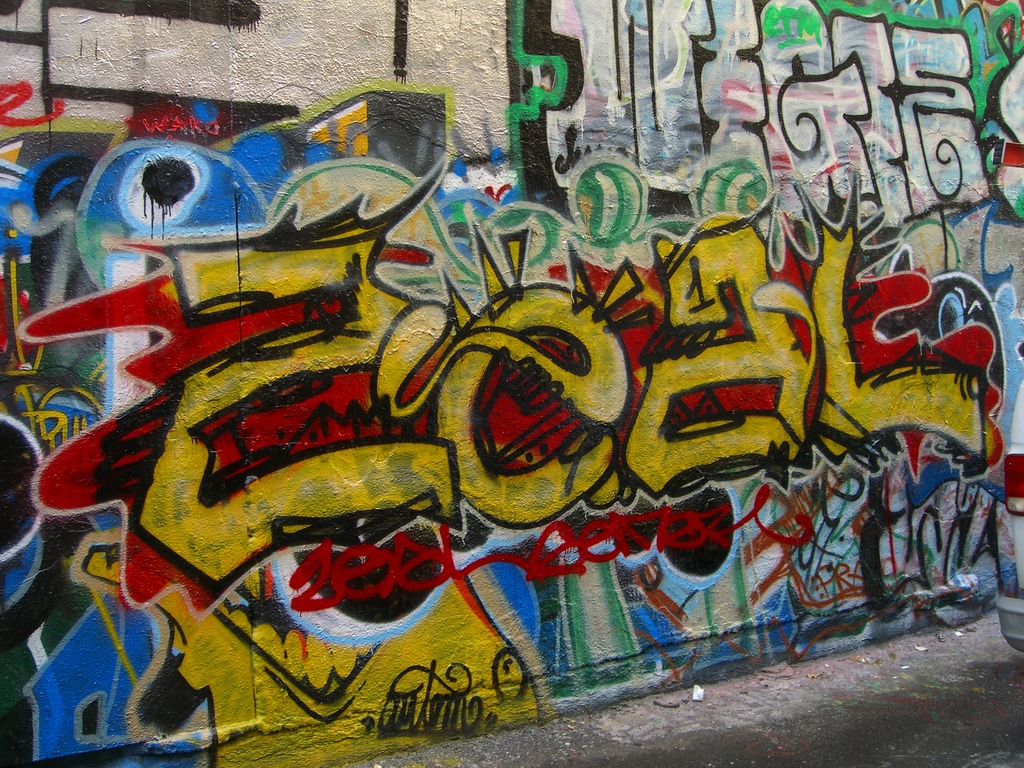
Zeal by Jason Taellious on flickr.com https://creativecommons.org/licenses/by-sa/2.0/legalcode
Love in action. The strong emotion of spirit, based on deep affection, that seeks to obtain what is loved or to remove what stands in the way. In religious terms, zeal is manifested by an impelling desire to advance the Kingdom of Christ, sanctify souls, and advance the glory of God by making him better known and loved, and thus more faithfully served. (Etym. Latin zelus, eagerness; from Greek zelos.)
- 
From CatholicCulture.org 
​
Zeal is a word that can often be misunderstood today. Often, we hear someone called a zealot and assume it is a negative thinking. They are so consumed with their cause that they cannot see any other options. But zeal does not have to be a bad thing. We all should have zeal for the things that are important to us, especially our faith and desire to share that faith with others. Zeal is the key to successful evangelization. It is one thing that all of the saints have in common, although each expressed it in a different way. From the way St. Francis of Assisi embraced the poor and a life of humility to the “Little Way” of St. Therese of Lisieux, the saints’ zeal for Christ is what made them such strong examples of how to live the Christian life. If we do not have a strong love and desire to live and share the Gospel, how can we expect others to do so. So embrace your zeal for the Lord and use that zeal to grow the Church and increase the presence of the Church in Detroit.
Comments

Catholic Culture: Banns of Marriage

6/6/2017

Comments

 
Picture
Banns of marriage are the public announcement in a Christian parish of an impending marriage between two persons. The word “bann” comes from the Old English verb “bannan” which means “to proclaim.” As such, banns as we know them today are proclamations intended to enable anyone to raise canonical or civil legal impediments to the marriage and, thus, prevent invalid marriages from occurring. Such impediments include a preexisting marriage that has not been dissolved or annulled, a vow of celibacy, lack of consent, or the couple being related within the prohibited degree of kinship.
 
The original Cannon law requiring banns to be read, which was designed to prevent clandestine marriages, was decreed in 1215 at the Lateran IV Council. On November 11, 1563, the Council of Trent made the provisions for banns more precise. It required that before the celebration of marriage the names of the contracting parties must be announced publicly in church during Mass by the parish priests of both parties on three consecutive Holy Days, Sundays being included as Holy Days. Traditionally, the banns were read from the pulpit and were also published in the parish bulletin. Complications arose under this system for marriages between a Catholic and a non-Catholic as the non-Catholic would not have a Catholic parish in which the banns could be read.
 
In the 14th century, marriage licenses were introduced to allow the usual period under the banns to be waived. This was accompanied by the required payment of a fee and a sworn declaration that there was no canonical impediment to the marriage. These first marriage licenses were usually issued by an archbishop, bishop or archdeacon and could be sought for many reasons: wishing to avoid the three week delay, desire to be married in a church other than your home parish or as a status symbol because of the cost associated with obtaining a marriage license.
 
By the late 20th century, greater mobility had limited the usefulness of banns to determine impediments to marriage. Because of this, the 1983 Code of Canon Law stated that the norms regarding publication of banns should be established by individual national bishops’ conferences. However, although it is no longer required by Canon Law, many parishes still publish banns of marriage in their weekly bulletin.
Comments

Jewish Feast of Pentecost

6/4/2017

Comments

 
Picture
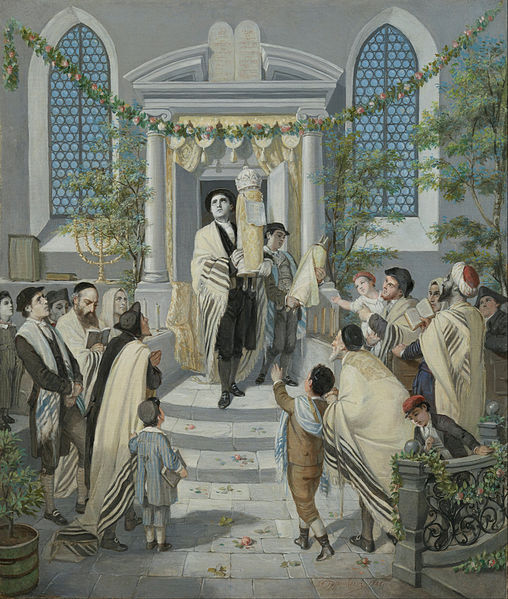
Shauvot (Pentecost) by Moritz David Oppenheimer
Pentecost began as a Jewish celebration of the wheat harvest n the late spring. No specific date was set - it took place when the harvest was ready.

Gradually it became customary to celebrate the feast 50 days after the Passover. This gave it additional meaning. Jewish scholars had calculated that when their ancestors left Egypt, they arrived at Mount Sinai approximately 50 days later. It was there that God gave them the Law and made a covenant with them: "I will be your God, and you will be my people."

Thus, Pentecost became a time for the Jewish people to celebrate the covenant that made them God's chosen people.

The word "pentecost" is Greek for 50th day.

- Little White Book, Diocese of Saginaw

Comments

The "Great Question"

6/4/2017

Comments

 
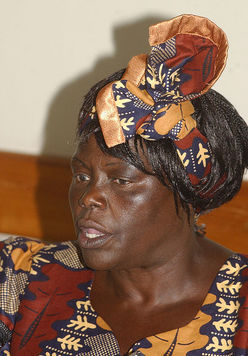
PictureBy Foto: Antônio Cruz/ABr (Agência Brasil [1])
"You cannot protect the environment unless you empower people, you inform them, and you help them understand that these resources are their own, that they must protect them."
         - Wangari Maathai, founder of the Green Belt Movement and recipient of the 2004 Nobel Peace Prize


There was a question that Albert Einstein referred to as the Great Question: Is the universe in all the sum of its forces, ultimately malevolent or benevolent? On that hangs everything.

As Christians, we believe that the universe is ultimately benevolent, and that God is shaping it into a benevolent kingdom. In light of that answer to Einstein's Great Question, so many other things don't matter.

When you die, the question that God is going to ask you is simply: "Were you ultimately kind or unkind toward life, toward my creation, toward flowers, toward people?

Ultimately, did you make the earth a kind or unkind place."

Because ultimately the whole purpose of creation is not to produce something ...it's just "that they may have life."

- Little White Book, Diocese of Saginaw

Comments

St. Kevin

6/3/2017

Comments

 
Picture
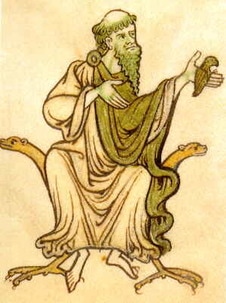
"As Kevin knelt and prayed, a blackbird mistook his outstretched hand for some kind of roost and swooped down upon it, laid a clutch of eggs in it and proceeded to nest in it as if it were the branch of a tree. Then, overcome with pity and constrained by his faith to love all creatures great and small, Kevin stayed immobile for hours and days and nights and weeks, holding out his hand until the eggs hatched and fledglings grew wings ..." - Seamus Heaney

Today is the feast of St. Kevin, patron saint of animals.

Born in Ireland about 498 A.D., Kevin was ordained a priest and shortly thereafter decided to live a quiet life in prayer and solitude as a hermit.
Kevin was known for his love of nature, and it's said the birds and animals were his favorite companions. He also became known as a holy man, and soon people were flocking to visit him.

With his solitude disrupted, Kevin traveled to the remote valley of Glendalough in County Wicklow, where he founded a monastery. Four years later, when he was assured the the monastery was established, he retired again to a life of solitude and prayer.

The Irish Nobel Prize-winning poet Seamus Heaney wrote a poem that tells the story of St. Kevin and the blackbird.

- Little White Book, Diocese of Saginaw


Comments

Saturday, Seventh Week of Easter

6/3/2017

Comments

 
Picture
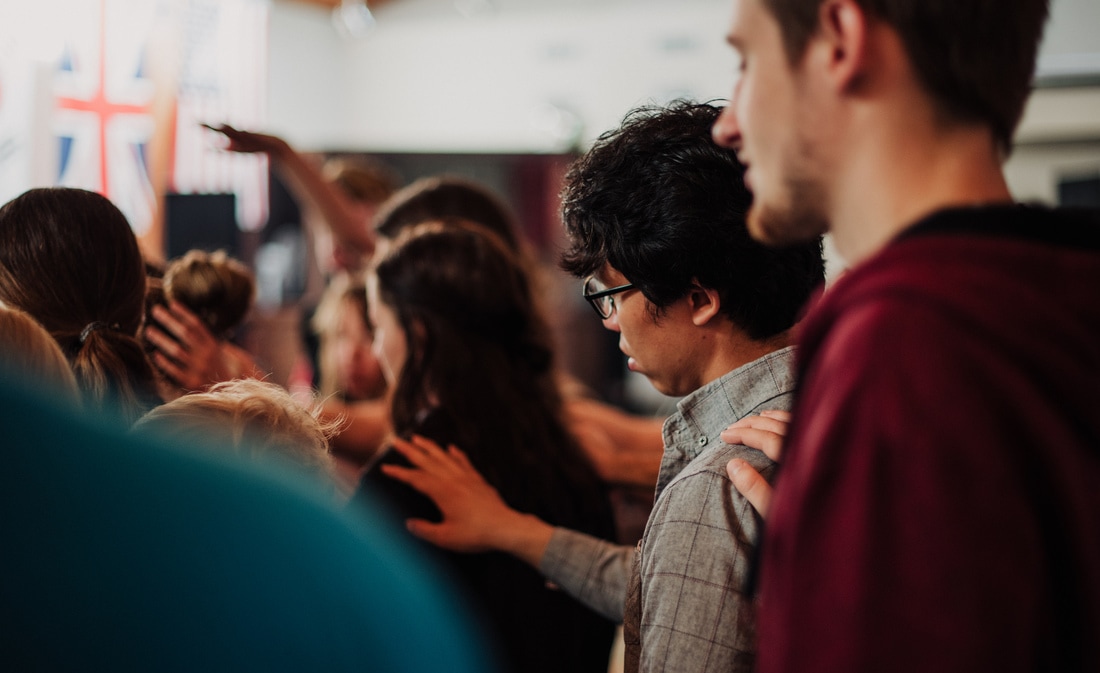
Community Life by YWAM Orlando on flickr.com https://creativecommons.org/licenses/by/2.0/legalcode
Brother and sisters, pray for us [too]. Greet all the brothers and sisters with a holy kiss. I adjure you by the Lord that this letter be read tot he brother and sisters. The grace of our Lord Jesus Christ be with you. (1 Thessalonians 5:25-28)

And so Paul concludes his first letter to the Christian community at Thessalonica.

Throughout his letter, he has made some important points to help them along the way. Now, in his concluding sentences, he reminds them to share those words with other members of the community.

Christianity is not a secret society. Some people may try to make it that way, but that's not the way Christianity is nor the way it was meant to be.

To be a Christian, to be a disciple of the Lord, involves every part of your life, often in a very public way. Christianity isn't a hobby, or something that touches only your private life. It affects the way you act in every aspect of your life.

But to live this way of life can be risky. Not everyone agrees with Christian beliefs and with the way Christians live their lives.

The christian community at Thessalonica understood that reality.

Christianity can never be a private way of life. Your faith should affect the way you see, think and act.

Non-negotiable.

- Little White Book, Diocese of Saginaw

Comments

Doughnut Day

6/2/2017

Comments

 
Picture
"As you ramble on through life, Brother, Whatever be your goal, Keep your eye upon the doughnut, And not upon the hole."
​                                                     - Margaret Atwood, "The Blind Assassin"

​
Today is National Doughnut Day.

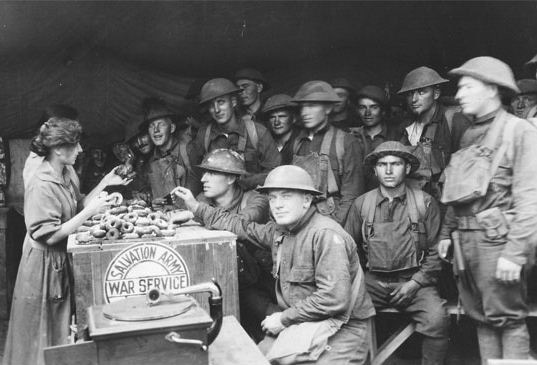
The tradition began in Chicago in 1938 to finance the Salvation Army's charitable efforts during the Great Depression and to honor the "doughnut girls" of World War I.

The Salvation Army became synonymous with doughnuts during World War I when they served the baked goods to American soldiers in France. Unable to procure the necessary ingredients for cakes or pies, the women's auxiliary at the Salvation Army canteens along the front lines improvised and came up with the doughnut. At one point, they served nearly 9,000 doughnuts a day, sometimes cooked in military steel helmets on a stove.

The ladies were soon dubbed "doughnut girls."

Today, donations on Doughnut Day help support the Salvation Army food pantries, and food programs for senior citizens and children.

- Little White Book, Diocese of Saginaw
Comments

Friday, Seventh Week of Easter

6/2/2017

Comments

 
Picture
What's Next? by Ivan on flickr.com https://creativecommons.org/licenses/by-sa/2.0/legalcode
The one who calls you is faithful, and he will also accomplish it. (1 Thessalonians 5:24)
​
Sometimes it takes a lot of courage to walk in the footsteps of the Lord.

The obstacles and threats along the way aren't always dramatic, but there are a lot of little risks involved. Yet whether the challenges are great or small, it still takes courage to become the person you want to be, the person you were made to be, in imitation of Christ.

The Christians at Thessalonica and the other early communities knew what it was like to be afraid now and then. The stories of Jesus and the letters from leaders like St. Paul gave them a source of courage to accomplish what they needed to do and to be in the world of their own time.

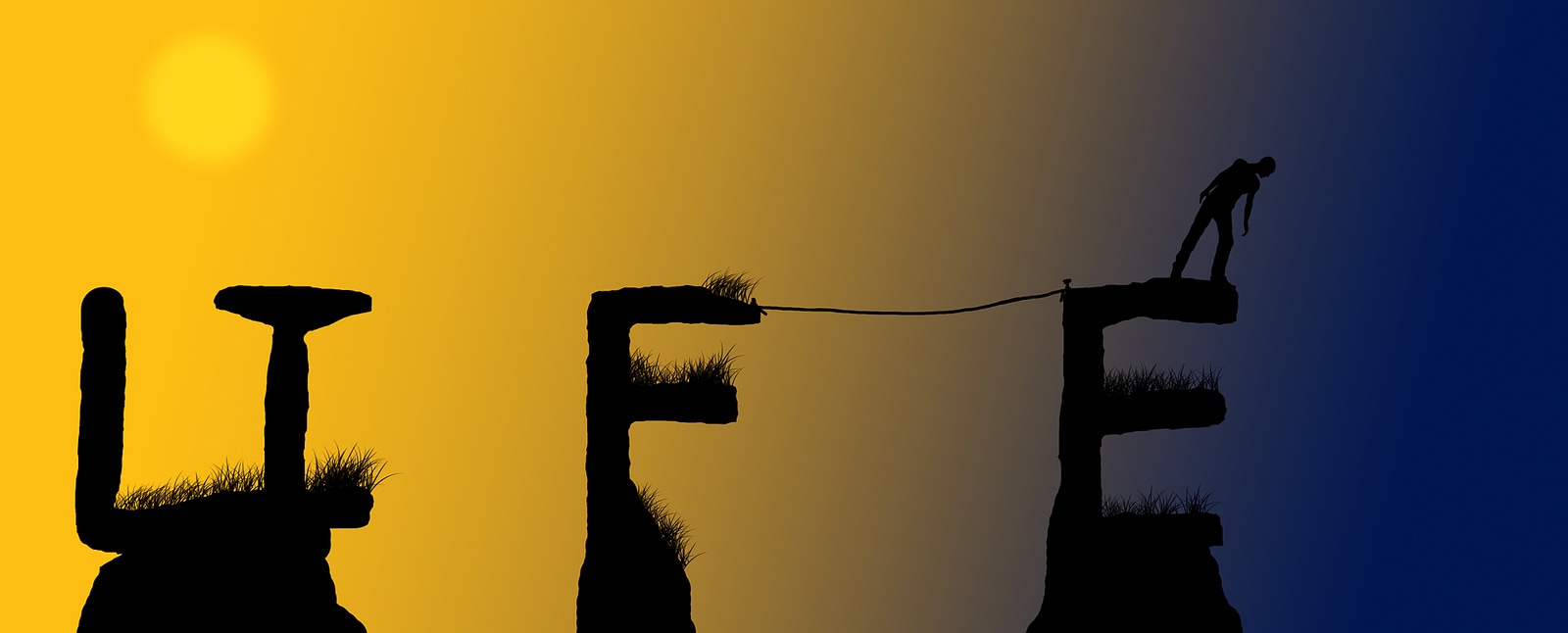
On the shelf of your life today, there are a lot of things that you know you really ought to accomplish. It's not a question of trying to figure out what you need to do. You know what you need to do. You know the kind of person you want to be. Yet, for some reason or another, you hold back. perhaps you are afraid of the risks involved.

It takes courage. It involves risk. But you're not alone. The Lord is pulling for you, and is ready to come in with special help if you need it.

At Mass, when you come together with other people who share your commitment to the Lord, you also receive - and give back -0 the courage and encouragement we all need in order to walk with the Lord.

- Little White Book, Diocese of Saginaw

Comments

Gospel Reflection: Pentecost Sunday - June 4, 2017

6/2/2017

Comments

 
Picture
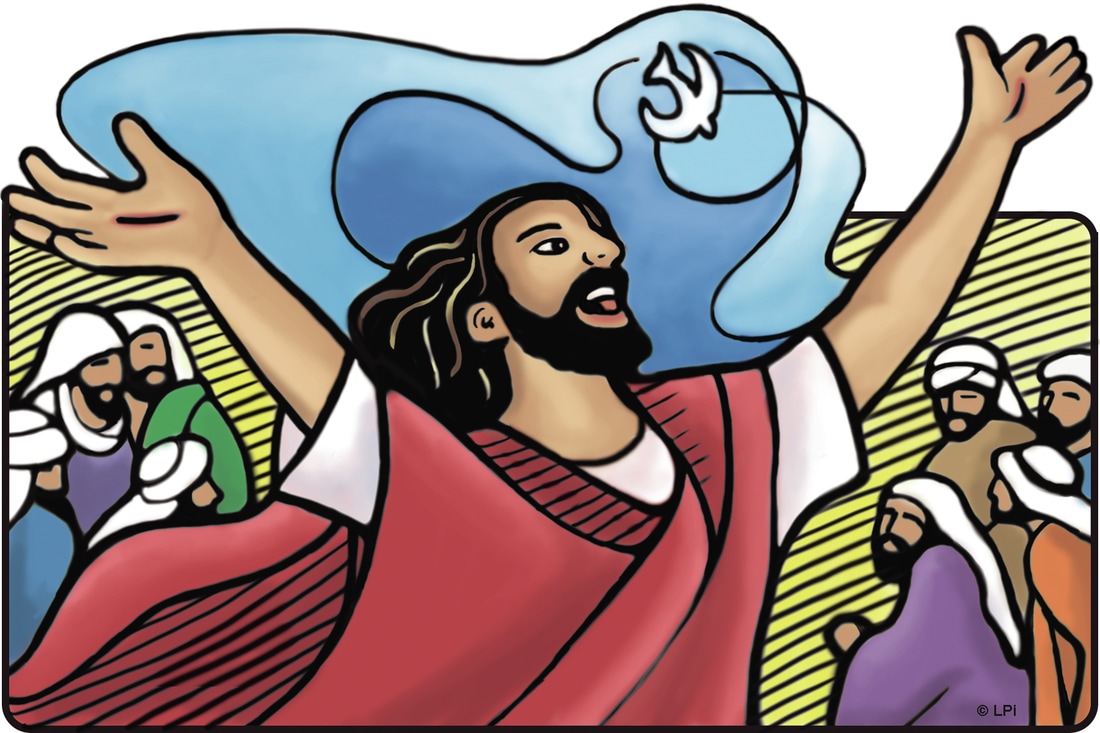
On the evening of that first day of the week, when the doors were locked, where the disciples were, for fear of the Jews, Jesus came and stood in their midst and said to them, "Peace be with you." When he had said this, he showed them his hands and his side. The disciples rejoiced when they saw the Lord. Jesus said to them again, "Peace be with you. As the Father has sent me, so I send you." And when he had said this, he breathed on them and said to them, "Receive the Holy Spirit. Whose sins you forgive are forgiven them, and whose sins you retain are retained."
 
- Matthew 28:16-20
 

It is significant that one of the first things Jesus did after his Resurrection was give the gift of the Holy Spirit to the disciples. Jesus knew what was going to happen and that the disciples would need someone to help them. He knew the challenges they would face and how difficult their mission to spread the Gospel was going to be. So he gave them the Spirit and, with it, the gifts that the Spirit brings. With these gifts, He knew that they would be successful and that the Church would grow.
 
But it did not stop there. If it had, Christianity would have died out two thousand years ago when the last Apostle died. Instead, the Apostles were given the ability to pass on the gift of the Spirit to others. And so that gift has been passed down, from generation to generation, via baptism and confirmation, to the present day. We, living in 2017, have received the same Spirit that the Apostles received on that first Pentecost, and we receive the same gifts: wisdom, good counsel, understanding, knowledge, piety, courage and wonder and awe. It is these gifts that we are called to use as we carry out our mission of sharing God’s love with all those we meet. But how do we know if we are using them well?
 
As Jesus tells us in Matthew’s Gospel, “By their fruits you will know them” (7:16). And so it is with the Holy Spirit. When we use His gifts correctly, we experience the Fruits of the Spirit: charity, joy, peace, patience, kindness, goodness, generosity, gentleness, faithfulness, modesty, self-control and chastity. In these virtues, we see the hallmarks of a holy life and virtues that we all should try to live out. But the key to all of this is that we can only accomplish it with the help of the Spirit. Just as we need to receive Jesus on a regular basis in the Eucharist, we need to constantly turn to the Holy Spirit for guidance and support. His gifts are freely given to all of us, but we will only see their fruits when we open ourselves up to the movements of the Spirit.

Comments

Fr. Thomas Berry

6/1/2017

Comments

 
Picture
"The naive assumption that the natural world is there to be possessed and used by humans for their advantage and in an unlimited manner cannot be accepted."
                                  - Fr. Thomas Berry

​
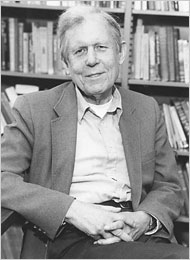
Fr. Thomas Berry became a major figure in the environmental movement.

Born William Nathan Berry on November 9, 1914, in North Carolina, he took the name Thomas (after St. Thomas Aquinas) when he professed his vows as a Passionist.

He received his doctorate from Catholic University of America, and spent many years teaching and studying Asian culture and religion. He taught and chaired the history of religions program at Fordham University in New York from 1966-1979. From 1975-1987, he was president of the American Teilhard Association, named after the Jesuit philosopher and scientist, Pierre Teilhard de Chardin, who was a major influence on Fr. Berry's work.

Fr. Berry (who called himself a "geologian") wrote many books on the environment, including The Dream of the Earth (1988), The Great Work: Our Way Into the Future (1992), and Evening Thoughts: Reflecting on Earth as Sacred Community (2006).

He died on this day in 2009, and is buried at Green Mountain Monastery in Greensboro, Vermont.

- Little White Book, Diocese of Saginaw

Comments
<<Previous
Forward>>

    ABOUT

    St. Peter Parish is a Roman Catholic faith community.  The purpose of this blog is to help parishioners and community members come to a better understanding of our Catholic faith and traditions.


    For more information about the parish, visit our website.


    Spotify Top Christian Tracks


    Archives

    June 2017
    May 2017
    April 2017
    March 2017
    February 2017
    January 2017
    December 2016
    November 2016
    October 2016
    May 2016
    April 2016
    March 2016
    February 2016
    January 2016
    December 2015
    November 2015
    October 2015
    September 2015
    August 2015
    July 2015
    June 2015
    May 2015
    April 2015
    March 2015
    February 2015
    January 2015
    December 2014
    November 2014

    Categories

    All
    Catholic Culture
    Catholic Teachings
    Catholic Traditions
    Church History
    Daily Readings
    Evangelization
    Feasts & Holy Days
    Gospel Reflection
    Little Black Book
    Little Blue Book
    Little Burgundy Book
    Little White Book
    Liturgical Year
    Pop Culture
    Prayer
    Saints & Heroes
    Spiritual Life
    VCAT
    What's That Word?

    RSS Feed

Powered by Create your own unique website with customizable templates.