Key Thoughts
  • Home
105 Market St.
Mount Clemens, M
586-468-4578

www.stpetermtclemens.weconnect.com

Gospel Reflection: 31st Sunday in Ordinary Time - October 30, 2016

10/28/2016

Comments

 
Picture
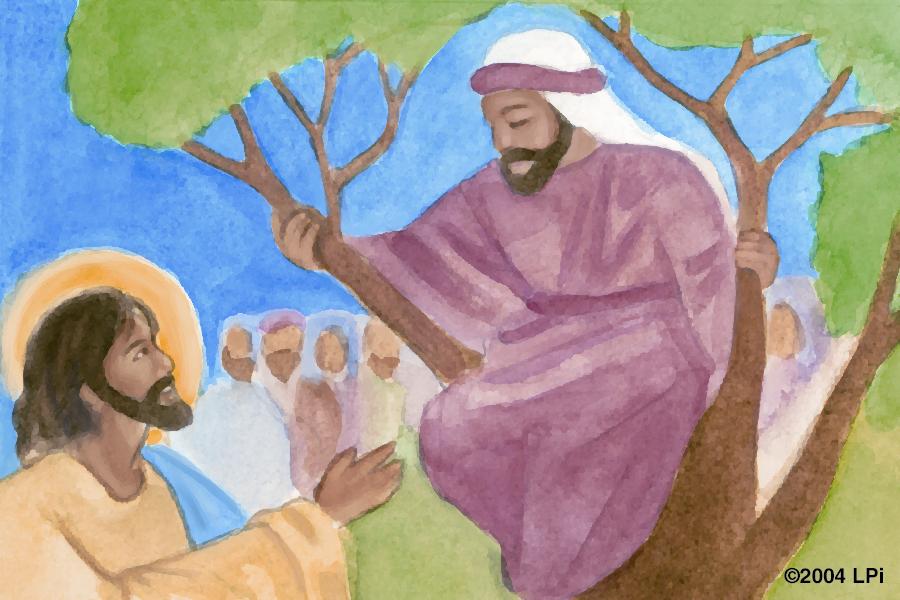
At that time, Jesus came to Jericho and intended to pass through the town. Now a man there named Zacchaeus, who was a chief tax collector and also a wealthy man, was seeking to see who Jesus was; but he could not see him because of the crowd, for he was short in stature. So he ran ahead and climbed a sycamore tree in order to see Jesus, who was about to pass that way. When he reached the place, Jesus looked up and said, “Zacchaeus, come down quickly, for today I must stay at your house.” And he came down quickly and received him with joy. When they all saw this, they began to grumble, saying, “He has gone to stay at the house of a sinner.” But Zacchaeus stood there and said to the Lord, “Behold, half of my possessions, Lord, I shall give to the poor, and if I have extorted anything from anyone I shall repay it four times over.” And Jesus said to him, “Today salvation has come to this house because this man too is a descendant of Abraham. For the Son of Man has come to seek and to save what was lost.” - Luke 19:1-10

Can you imagine watching this scene play out? Everyone is excited because Jesus, this great rabbi and teacher, is coming to your town. Not wanting to be left out Zacchaeus joins the crowd but, being rather short in stature, he's unable to see over those in front of him and, being one of the most hated men in town, no one is willing to move aside so he can mover toward the front. So what does Zacchaeus do? He climbs a tree. How we would react at the sight of a grown man climbing a tree so he could see someone come down the street? How much must he have wanted to just see Jesus in order to risk such embarrassment? But Zacchaeus took that risk anyway, and he was rewarded by Jesus with the promise of salvation.

How often do we take such risks for our faith? Do we go "out on a limb" and publicly share our faith with others? Do we witness to our faith in our daily lives? The Gospels tell us that we are supposed to be in this world, but not of this world. Do we really live this? Are those around us able to tell, just by what we do, that we are Christians? 

This should be our goal as Christians and Catholics. In everything we do, we should be thinking about whether our actions mark us as different. In the 90s, there was a popular saying, "What Would Jesus Do?" It could be found on bracelets, TV shirts and even was talked about in the media. Although the phrase has become a little cliche, it really is a good way to evaluate what we are doing. If we truly tried to act as Christ would in everything we did, no matter how much embarrassment it might cause us, the world would know that we were Christians just by looking at us. 

So give that a try this week. Try to live out your faith in all that you do, not just on Sundays at Mass. Like Zacchaeus, go out on a limb for Christ and be willing to accept some embarrassment. You'll be amazed by the difference just a small change can make.

Comments

What's That Word?: Amen

10/27/2016

Comments

 
Picture
Image by cranky messiah on flickr.com https://creativecommons.org/licenses/by-nc/2.0/legalcode
Solemn prayerful affirmation, taken over by the Christians from the synagogue for scriptural and liturgical use in apostolic times. It was often spoken by Christ, and is given as one of his names (Revelation 3:14). Now used as an acclamation of assent or religious confirmation of the speaker's own thoughts. (Etym. Latin amen; Greek amen, verily; Hebrew amen verily, sobeit; from aman, to confirm.)

- from CatholicCulture.org

We have all used the word "Amen," but how many of us have stopped to think about what it really means. "Amen" comes from Hebrew and means "verily" or "so be it." It was used as a way to confirm. This is why it was adopted by Jesus and early Christians as a way to affirm what is being said. Essentially, when we respond "Amen" at the end of a prayer, we are affirming that we truly believe the words we have just spoken. When we respond "Amen" after receiving the Eucharist, we are affirming that we truly believe that what he have just received is truly Jesus Christ, body, blood, soul and divinity. In this way, the word "Amen" takes on a great importance and really is not something that should be said lightly or without much thought. So next time you say "Amen," pause for a moment and think to yourself, "Do I really believe this?" If the answer is yes, then respond with a strong and confident, "Amen!"
Comments

Catholic Culture: Relics

10/25/2016

Comments

 
Picture
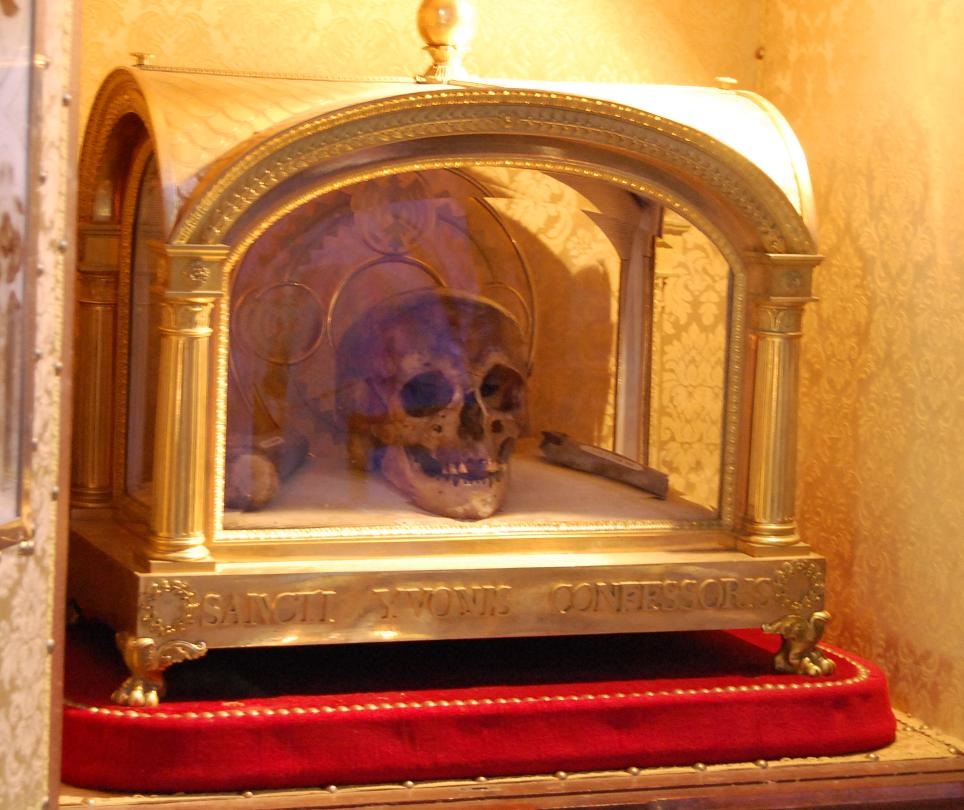
By Derepus (Foto zal gemaakt in de kerk) [GFDL (http://www.gnu.org/copyleft/fdl.html) or CC BY-SA 3.0 (http://creativecommons.org/licenses/by-sa/3.0)], via Wikimedia Commons
By Fr. William P. Saunders

Relics include the physical remains of a saint (or of a person who is considered holy but not yet officially canonized) as well as other objects which have been "sanctified" by being touched to his body.


These relics are divided into two classes. First class or real relics include the physical body parts, clothing and instruments connected with a martyr's imprisonment, torture and execution. Second class or representative relics are those which the faithful have touched to the physical body parts or grave of the saint.

The use of relics has some, although limited, basis in sacred Scripture. In 2 Kings 2:9-14, the prophet Elisha picked up the mantle of Elijah after Elijah had been taken up to heaven in a whirlwind. With it, Elisha struck the water of the Jordan, which then parted so that he could cross. In another passage (13:20-21), some people hurriedly bury a dead man in the grave of Elisha, "but when the man came in contact with the bones of Elisha, he came back to life and rose to his feet." In the Acts of the Apostles we read, "Meanwhile, God worked extraordinary miracles at the hands of Paul. When handkerchiefs or cloths which had touched his skin were applied to the sick, their diseases were cured and evil spirits departed from them" (19:11-12). In these three passages, a reverence was given to the actual body or clothing of these very holy people who were indeed God's chosen instruments—Elijah, Elisha and St. Paul. Indeed, miracles were connected with these "relics"—not that some magical power existed in them, but just as God's work was done through the lives of these holy men, so did His work continue after their deaths. Likewise, just as people were drawn closer to God through the lives of these holy men, so did they (even if through their remains) inspire others to draw closer even after their deaths. This perspective provides the Church's understanding of relics.

Read More
Comments

Gospel Reflection: 30th Sunday in Ordinary Time - October 23, 2016

10/21/2016

Comments

 
Picture
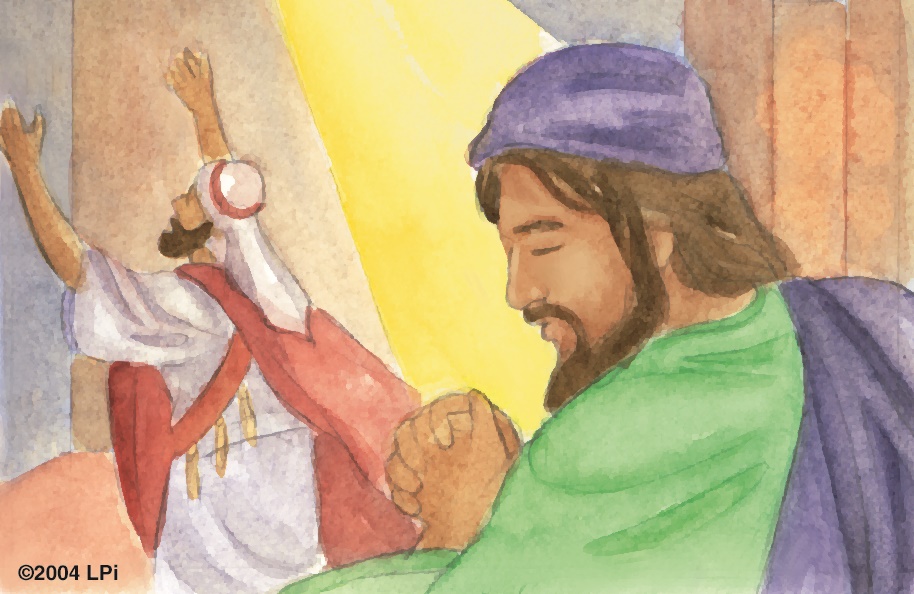
Jesus addressed this parable to those who were convinced of their own righteousness and despised everyone else. “Two people went up to the temple area to pray; one was a Pharisee and the other was a tax collector. The Pharisee took up his position and spoke this prayer to himself, ‘O God, I thank you that I am not like the rest of humanity -- greedy, dishonest, adulterous -- or even like this tax collector. I fast twice a week, and I pay tithes on my whole income.’ But the tax collector stood off at a distance and would not even raise his eyes to heaven but beat his breast and prayed, ‘O God, be merciful to me a sinner.’ I tell you, the latter went home justified, not the former; for whoever exalts himself will be humbled, and the one who humbles himself will be exalted.”
                                                                                               - Luke 18:9-14


How often do we act like the Pharisee in this parable - looking down on those around us and grateful that we are not like them? Sometimes it seems like this is our default position. We look at those around us and silently think how much better we must be than them. As humans, we have a remarkable ability to look at everyone else's lives and identify all of the problems, faults and failings they have. It is far too easy to examine other's lives and turn a blind eye to our own.

This is the issue that Jesus is addressing in this Sunday's Gospel. We are called to be more like the tax collector, who stood humbly before God and acknowledged his sinfulness. It really is ironic that it is through humility that God raises us up to become the best version of ourselves. This runs counter to where we are as a culture and society. In today's culture, we are told that you must be confident and self-assured in everything we do. We should never admit our faults or weaknesses as these would be used against us. As the saying goes, "It's a dog-eat-dog world and only the strong survive." 

But as Christians, we are called to a different path. We are called to accept our failings and allow God to use them to create better versions of ourselves. It truly is a mystery how that can happen but we have seen it time and again throughout the history of the Church. The stories of the saints are filled with individuals who, from a modern perspective, had everything going for them. They were wealthy, successful, powerful people, and yet there was a longing and unhappiness deep inside. It was only when they acknowledged their sinful nature and turned to God with true and honest prayer, that they achieved true happiness.

The same is true for us today. This is the power we experience in the sacrament of Reconciliation. We are able to humbly submit ourselves to God, confess our sins, failings and weaknesses and ask Him to strengthen us with His grace. By doing this, we are able to grow in our Faith and become closer to the person God created us to be. If you do this, you will be amazed at the wonders God will work in your life.

Litany of Humility

O Jesus! meek and humble of heart, Hear me.

From the desire of being esteemed, Deliver me, Jesus.
From the desire of being loved… Deliver me, Jesus.
From the desire of being extolled … Deliver me, Jesus.
From the desire of being honored … Deliver me, Jesus.
From the desire of being praised … Deliver me, Jesus.
From the desire of being preferred to others… Deliver me, Jesus.
From the desire of being consulted … Deliver me, Jesus.
From the desire of being approved … Deliver me, Jesus.

From the fear of being humiliated … Deliver me, Jesus.
From the fear of being despised… Deliver me, Jesus.
From the fear of suffering rebukes … Deliver me, Jesus.
From the fear of being calumniated … Deliver me, Jesus.
From the fear of being forgotten … Deliver me, Jesus.
From the fear of being ridiculed … Deliver me, Jesus.
From the fear of being wronged … Deliver me, Jesus.
From the fear of being suspected … Deliver me, Jesus.
​

That others may be loved more than I ... Jesus, grant me the grace to desire it.
That others may be esteemed more than I … Jesus, grant me the grace to desire it.
That, in the opinion of the world, others may increase and I may decrease … Jesus, grant me the grace to desire it.
That others may be chosen and I set aside … Jesus, grant me the grace to desire it.
That others may be praised and I unnoticed … Jesus, grant me the grace to desire it.
That others may be preferred to me in everything… Jesus, grant me the grace to desire it.
That others may become holier than I, provided that I may become as holy as I should…
Jesus, grant me the grace to desire it.

Comments

WHat's That Word?: Original Sin

10/20/2016

Comments

 
Picture
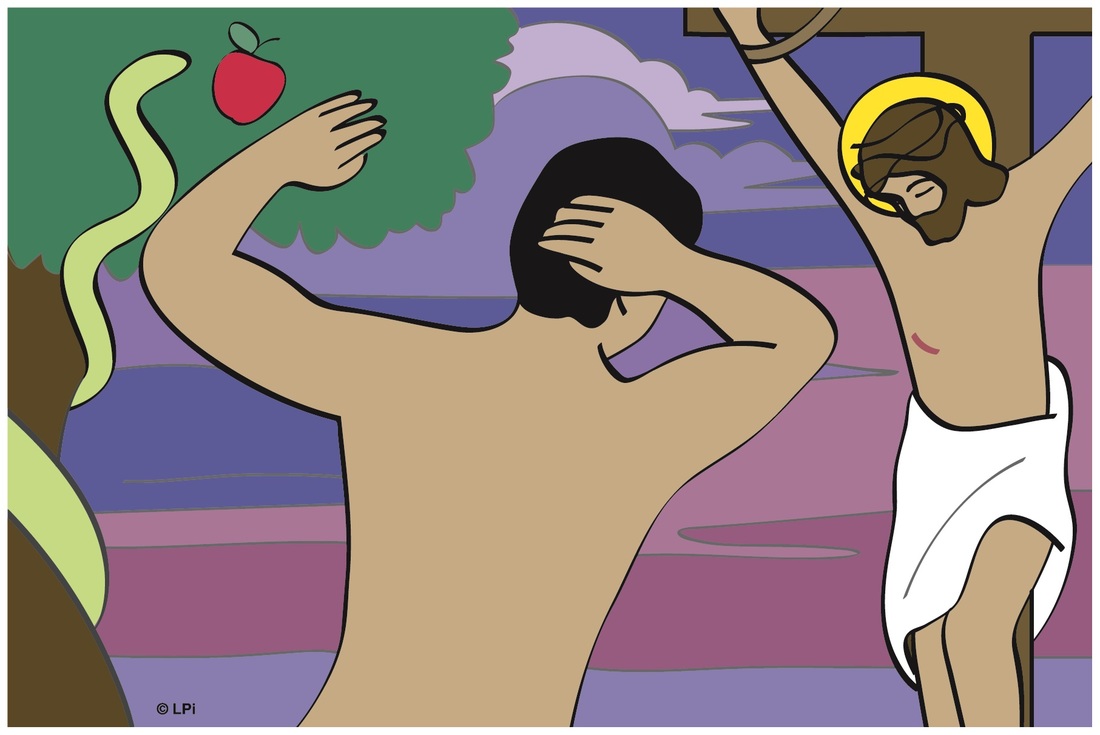
Either the sin committed by Adam as the head of the human race, or the sin he passed onto his posterity with which every human being, with the certain exception of Christ and his Mother, is conceived and born. The sin of Adam is called originating original sin (originale originans); that of his descendants is originated original sin (originale originatum). Adam's sin was personal and grave, and it affected human nature. It was personal because he freely committed it; it was grave because God imposed a serious obligation; and it affected the whole human race by depriving his progeny of the supernatural life and preternatural gifts they would have possessed on entering the world had Adam not sinned. Original sin in his descendants is personal only in the sense that the children of Adam are each personally affected, but not personal as though they had voluntarily chosen to commit the sin; it is grave in the sense that it debars a person from the beatific vision, but not grave in condemning one to hell; and it is natural only in that all human nature, except for divine intervention, has it and can have it removed only by supernatural means.

​- from CatholicCulture.org

Original sin refers to the state in which all humans, with the exception of Jesus and the Blessed Mother, were born. In the past, it has been described as a spot or mark on our souls that is cleansed by baptism. While there is a certain usefulness in this analogy, it falls short of a truly complete understanding of what original sin is. Essentially, as a result of Adam and Eve's initial sin and fall from grace, all humans are born into a state in which we have a tendency toward sin. This is one of the marks of what it means to be human. This tendency is referred to as original sin. When we say that baptism removes the stain of original sin, what we really mean is that, through the Sacrament of Baptism, God's grace is poured out on us and we are strengthened to resist our human tendency toward sin. Thus, at our baptisms, we are "cleansed" of that original sin and can take our place in heaven as children of God. Throughout our lives, we will continue to fall and sin, but, because of the grace we received at baptism, we can turn to God for forgiveness and mercy and He will grant it to us, in part because the penalty for the original sin committed by Adam has been paid by the "New Adam," Jesus Christ. In a way, original sin can be seen as a great gift because, without it, we would never have needed Jesus to come to earth as our savior.
Comments

Catholic Culture: Sacred Images

10/18/2016

Comments

 
Picture
Image by Ben Tavener on flickr.com https://creativecommons.org/licenses/by/2.0/legalcode
By Fr. William P. Saunders

​The attack against the Church's use of religious statues or pictures arises from a misinterpretation of the clauses following the First Commandment: "I, the Lord, am your God.... You shall not have other gods besides me. You shall not carve idols for yourselves in the shape of anything in the sky above or on the earth below or in the waters beneath the earth; you shall not bow down before them or worship them" (Ex 20:2-5). (Actually, some Protestant denominations list the italicized clause as the second commandment and then combine our Ninth and Tenth Commandments. Interestingly, even the controversial "Ten Commandments Monument" in Alabama list the commandments this way.)


In understanding the context of the First Commandment, we must remember that at the time the 10 Commandments were given, no one had ever looked upon the face of God. Even Moses who was in the presence of God on Mount Sinai did not see the face of God: God said to Moses, "I will make all my beauty pass before you and in your presence I will pronounce my name, 'Lord....' But my face you cannot see, for no man sees me and still lives" (Ex 33:19-20). So no one could ever possibly capture God in a statue or a picture; to do so would be simply a conjuring of the imagination.

However, Christ, true God and true man, entered this world and took on our own human flesh. The Word of God became flesh and dwelt among us. In the gospel prologue, St. John wrote, "...We have seen His glory: The glory of an only Son coming from the Father filled with enduring love" (Jn 1:14); therefore, "no one has ever seen God. It is God the only Son, ever at the Father's side, who has revealed Him" (Jn 1:18).

Read More
Comments

Gospel Reflection: 29th Sunday in Ordinary Time - October 16, 2016

10/14/2016

Comments

 
Picture
Jesus told his disciples a parable about the necessity for them to pray always without becoming weary. He said, “There was a judge in a certain town who neither feared God nor respected any human being. And a widow in that town used to come to him and say, ‘Render a just decision for me against my adversary.’ For a long time the judge was unwilling, but eventually he thought, ‘While it is true that I neither fear God nor respect any human being, because this widow keeps bothering me I shall deliver a just decision for her lest she finally come and strike me.’” The Lord said, “Pay attention to what the dishonest judge says. Will not God then secure the rights of his chosen ones who call out to him day and night? Will he be slow to answer them? I tell you, he will see to it that justice is done for them speedily. But when the Son of Man comes, will he find faith on earth?” - Luke 18:1-8

Think about the relationships in your life. Whether it be with your parents, children or friends, how you would you feel if you only heard from them when there was a problem? Perhaps they are having trouble with someone at work or school. Maybe they need help with something around the house. They could even be in a situation where they need money or some other kind of support. Clearly you would offer them whatever help was needed, but if this was the only time you heard from them, you would probably feel a little resentful or disappointed in your relationship. How much nicer would it be if you also heard from them when something good happened in their life? How much happier would you be if they called you up to just talk about your day or say hi? How much better would your relationship be if they shared not only their problems, but their hopes and dreams, their desires and fears? Most of us would agree that this is the relationship we desire with those who are closest to us.

This is the kind of relationship God desires to have with each of us. Too often, we only turn to God when their is a problem. When someone in our lives is sick, we pray. When we are having difficulty making a decision, we pray. When our relationships are in trouble, we pray. But what about the other moments in our life? When you get a raise or promotion at work, is your first instinct to offer God a prayer of thanksgiving? When you see a beautiful sunrise, do you offer God a prayer of praise for His creation? Do you ever just talk to God about what is going on in your life? Do you ever just sit in silence and listen to what God is trying to tell you?

This is the kind of relationship Jesus is urging his disciples to have when he tells them this parable. We are called to have a life of prayer, rather than just prayer moments. As St. Paul urges us, "Pray without ceasing, give thanks in all circumstances." In all that we do, we should be praying to God: prayers of thanksgiving, petitions, praise and confession. We should be talking to God constantly throughout the day: sharing with Him our deepest fears and desires, asking Him for guidance, praising Him for the great things He is doing in our lives and our world. And if we do this, we are assured by Jesus that our prayers will be answered. Just as it was through her persistence that the widow finally received a judgment from the dishonest judge, it is through our persistent prayer that we will have our prayers answered. And then, we will truly have a relationship with God worth talking about.

Comments

What's That Word?: Sacramental

10/13/2016

Comments

 
Picture
Image by Patrick Murphy on flickr.com https://creativecommons.org/licenses/by-nd/2.0/legalcode
"Objects or actions that the Church uses after the manner of sacraments, in order to achieve through the merits of the faithful certain effects, mainly of a spiritual nature. They differ from sacraments in not having been instituted by Christ to produce their effect in virtue of the ritual performed. Their efficacy depends not on the rite itself, as in the sacraments, but on the influence of prayerful petition; that of the person who uses them and of the Church in approving their practice. The variety of sacramentals spans the whole range of times and places, words and actions, objects and gestures that, on the Church's authority, draw not only on the personal dispositions of the individuals but on the merits and prayers of the whole Mystical Body of Christ."

- from CatholicCulture.org


Unlike sacraments, which were instituted by Jesus, sacramentals have been instituted by the Church. They do not confer the grace of the Holy Spirit themselves, but instead prepare us to receive that grace or remind us of grace we have already seen. Thus, holy water reminds us of our baptism, holy oils recall healings and of the body and spirit, and incense is a sign of blessing and respect. Together, these sacramentals form an important part of Church ritual and worship and add to the beauty and solemnity of our Catholic faith.
Comments

Catholic Culture: The Rosary

10/11/2016

Comments

 
Picture
Image by jam343 on Flickr https://creativecommons.org/licenses/by/2.0/legalcode
Traditionally, the month of October has been dedicated to the Rosary. Most Catholics are familiar with the Rosary, having prayed it frequently throughout our lives. But where did this devotion come from and why are so many people so devoted to its practice?

The practice of using knotted prayer ropes in Christianity dates back to the Desert Fathers in the 3rd and early 4th centuries. These ropes were used as an aid for monks who recited the 150 psalms daily. This practice spread to the laity, who often substituted Our Fathers for the psalms as most people at this time could not read. Eventually, the knotted ropes were replaced with prayer beads, referred to as paternosters, after the first two words of the Our Father in Latin.

Read More
Comments

    ABOUT

    St. Peter Parish is a Roman Catholic faith community.  The purpose of this blog is to help parishioners and community members come to a better understanding of our Catholic faith and traditions.


    For more information about the parish, visit our website.


    Spotify Top Christian Tracks


    Archives

    June 2017
    May 2017
    April 2017
    March 2017
    February 2017
    January 2017
    December 2016
    November 2016
    October 2016
    May 2016
    April 2016
    March 2016
    February 2016
    January 2016
    December 2015
    November 2015
    October 2015
    September 2015
    August 2015
    July 2015
    June 2015
    May 2015
    April 2015
    March 2015
    February 2015
    January 2015
    December 2014
    November 2014

    Categories

    All
    Catholic Culture
    Catholic Teachings
    Catholic Traditions
    Church History
    Daily Readings
    Evangelization
    Feasts & Holy Days
    Gospel Reflection
    Little Black Book
    Little Blue Book
    Little Burgundy Book
    Little White Book
    Liturgical Year
    Pop Culture
    Prayer
    Saints & Heroes
    Spiritual Life
    VCAT
    What's That Word?

    RSS Feed

Powered by Create your own unique website with customizable templates.