Key Thoughts
  • Home
105 Market St.
Mount Clemens, M
586-468-4578

www.stpetermtclemens.weconnect.com

What's That Word?: Holy Trinity

8/3/2017

Comments

 
Picture
A term used since A.D. 200 to denote the central doctrine of the Christian religion. God, who is one and unique in his infinite substance or nature, is three really distinct persons, the Father, Son, and Holy Spirit. The one and only God is the Father, the Son, and the Holy Spirit. Yet God the Father is not God the Son, but generates the Son eternally, as the Son is eternally begotten. The Holy Spirit is neither the Father nor the Son, but a distinct person having the divine nature from the Father and the Son by eternal procession. The three divine persons are co-equal, co-eternal, and consubstantial and deserve co-equal glory and adoration.
 
- From catholicculture.org 
​
The Holy Trinity is one of the greatest mysteries of the Christian faith. The idea of three distinct persons who form one God is one that our human minds are incapable of understanding. Rather, although we can try to understand it through analogies and symbols, we must accept what we believe entirely on faith. While the individual persons of the Trinity are present, in different forms, throughout Sacred Scripture, the Trinity itself is revealed to us in two particular events: the Baptism of Jesus and the Transfiguration. At the Baptism of Jesus, we see the Father in the voice from the heavens, the Son in the person of Jesus and the Holy Spirit in the form of a dove. At the Transfiguration, we again see the Father in the voice, the Son in Jesus and the Holy Spirit in the shining cloud. These two events, called theophanies or “God appearances,” are gifts from God to help us understand the triune nature of God and the mystery that where one person of the Trinity is present, all are present.

Comments

What's That Word?: Doctrine

1/19/2017

Comments

 
Picture
Image by More Good Foundation on flickr.com https://creativecommons.org/licenses/by-nc/2.0/legalcode
Any truth taught by the Church as necessary for acceptance by the faithful. The truth may be either formally revealed (as the Real Presence), or a theological conclusion (as the canonization of a saint), or part of the natural law (as the sinfulness of contraception). In any case, what makes it doctrine is that the Church authority teaches that it is to be believed. This teaching may be done either solemnly in ex cathedra pronouncements or ordinarily in the perennial exercise of the Church's magisterium or teaching authority. Dogmas are those doctrines which the Church proposes for belief as formally revealed by God. (Etym. Latin doctrina, teaching.)

- from CatholicCulture.org

​
Doctrines are what we, as Catholics, believe. They are truths which the Church tells us are things we must believe in. The presence of doctrines are one of the things which separate Catholics from most other denominations of Christianity. We have a clear set of beliefs which are held by all people who call themselves Catholics. These doctrines are defined for us by the Church through Sacred Scripture, Sacred Tradition and the teachings of the Magisterium. Because of this, doctrines do not change in the sense that we no longer believe in it. Instead, as our understanding grows, a doctrine may be added on to or our understanding of it may change in a way that allows for more insight. This differs from disciplines, which are practices of the Church. Examples of disciplines would be rules regarding fasting, Holy Days of Obligation and priestly celibacy. While these are things which must be followed by the faithful, they can also be changed by the Magisterium at any point in the future.
 
Comments

What's That Word?: Infallibility

12/29/2016

Comments

 
Picture
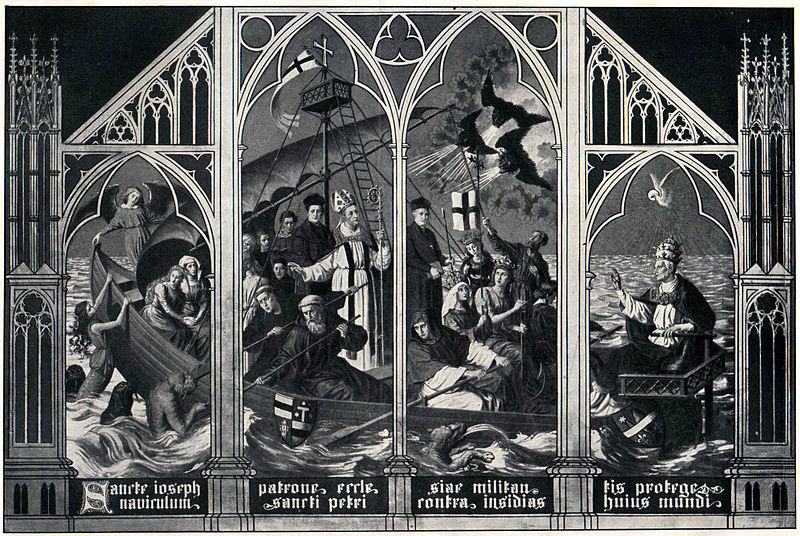
By Friedrich Stummel (Die katholischen Missionen) [CC BY 3.0 (http://creativecommons.org/licenses/by/3.0)], via Wikimedia Commons
The inability to err in teaching the truth. In theology, it refers to: (1) the Church, in that she preserves and teaches the deposit of truth as revealed by Christ; (2) the Roman Pontiff, when he teaches ex cathedra in matters of faith or morals, and indicates that the doctrine is to be believed by all the faithful; (3) the College of Bishops, when speaking in union with the Pope in matters of faith and morals, agreeing that a doctrine must be held by the universal Church, and the doctrine is promulgated by the Pontiff.

- Catholic Dictionary, p. 408 

​
The Doctrine of Infallibility, while not officially taught until the First Vatican Council in 1869-70, has been held by the Church since its beginning. Some people, especially our Protestant brothers and sisters, assume that infallibility means the Pope can never make an incorrect statement. This ignores the beauty and requirements of the doctrine. Essentially, this doctrine teaches that God will preserve the Church from erroneous teachings as long as certain qualifications are met. These include the teaching being proclaimed by the Pope, the teaching being about matters of faith and morals and the teaching be declared as something that must be held by the universal Church. Since it has such rigorous requirements, situations in which infallibility are invoked are fairly unusual. This doctrine really is something we as Catholics should rejoice in because it means that God so loves His church that He is willing to preserve her from error.

Comments

What's That Word?: Incarnation

12/22/2016

Comments

 
Picture
The Nativity by William Bell Scott
The central mystery of Christianity, the doctrine that in the union of the divine nature of the Second Person of the Holy Trinity with human nature, the Son of God assumed our humanity, body and soul, and was born of the Virgin Mary, to dwell in our midst in order to accomplish the work of our redemption.
 
- Catholic Dictionary, p. 405
 

The mystery of the Incarnation is one of the greatest mysteries of our Catholic faith. Without it, nothing else we believe in would have happened or mattered. Essentially, the Incarnation, which we celebrate at Christmas, is when Jesus, as the Second Person of the Trinity, became fully human while still remaining fully divine. The word “incarnation” comes from the Latin for “to become flesh” and this is literally what is happening. The Word of God is becoming flesh so that we might be saved. There is a saying, “There can be no Good Friday without Christmas and no cross without the crib.” If Jesus had not become human in the Incarnation, He would not have been able to give His life for us on the cross and rise from the dead to conquer sin and death. This is why Christmas is second only to Easter among the Church’s feast days.

Comments

What's That Word?: Magisterium

12/15/2016

Comments

 
Picture
Lothar Wolleh [CC BY-SA 3.0 (http://creativecommons.org/licenses/by-sa/3.0)], via Wikimedia Commons
The Church's teaching authority, vested in the bishops, as successors of the Apostles, under the Roman Pontiff, as successor of St. Peter. Also vested in the Pope, as Vicar of Christ and visible head of the Catholic Church.

- from CatholicCulture.org


As Catholics, what we believe comes from both Scripture and Tradition. But how do we know what beliefs to take from these two sources? How do we know the correct interpretation of the Bible or which traditions and teachings are actually Tradition? That is where the Magisterium come into play. Essentially, the Magisterium is the authority, given to the bishops by Christ as successors of the Apostles, to teach on matters of faith and morals. When the Magisterium speaks on a particular subject, Catholics are obliged to accept that teaching as true. However, the Magisterium is always in communion with the Pope, who has the ultimate teaching authority within the Church.
Comments

What's That Word?: Immaculate Conception

12/8/2016

Comments

 
Picture
By © Ralph Hammann - Wikimedia Commons (Own work) [CC BY-SA 4.0 (http://creativecommons.org/licenses/by-sa/4.0) or Public domain], via Wikimedia Commons
Title of the Blessed Virgin as sinless from her first moment of existence. In the words of Pope Pius IX's solemn definition, made in 1854, "The most holy Virgin Mary was, in the first moment of her conception, by a unique gift of grace and privilege of almighty God, in view of the merits of Jesus Christ the Redeemer of mankind, preserved free from all stain of original sin." This means that since the first moment of her human existence the mother of Jesus was preserved from the common defect of estrangement from God, which humanity in general inherits through the sin of Adam. Her freedom from sin was an unmerited gift of God or special grace, and an exception to the law, or privilege, which no other created person has received.

- from CatholicCulture.org


Mary as the Immaculate Conception, while not officially stated until the 19th century, is a concept that has existed since the early days of the Church. Although many people believe it refer to Jesus's conception, it actually refers to Mary's conception without the stain of original sin. This gift was given to the Blessed Mother in anticipation of her "Yes" to God's plan for the Incarnation. By preserving Mary from sin, God established her as the New Eve. Just as through Eve, all men and women fell from grace and the gates of heaven were locked, through Mary, all men and women would be saved and the gates of heaven opened. It is this great gift that we celebrate every December 8th.
Comments

What's That Word?: Communion of Saints

12/1/2016

Comments

 
Picture
© José Luiz Bernardes Ribeiro / , via Wikimedia Commons
The unity and co-operation of the members of the Church on earth with those in heaven and in purgatory. They are united as being one Mystical Body of Christ. The faithful on earth are in communion with each other by professing the same faith, obeying the same authority, and assisting each other with their prayers and good works. They are in communion with the saints in heaven by honoring them as glorified members of the Church, invoking their prayers and aid, and striving to imitate their virtues. They are in communion with the souls in purgatory by helping them with their prayers and good works.

- from CatholicCulture.org


The concept of the Communion of Saints is really one of the most beautiful in the Catholic faith. It is our belief that all believers, both living and dead, are connected through our mutual prayers and works for each other. This includes the saints in heaven, the souls in purgatory and believers on earth. Because we are all believers in Christ, we are all part of His Body. As members of the same Body, we have a duty to work together and pray for each other. Through these works and prayers, we are able to strengthen each other and encourage each other to live holier and more faith-filled lives. This communion with all believers is part of what we celebrate at Mass each Sunday, and is the reason we often call receiving the Eucharist "going to communion." It is an outward sign of the unity we share with believers around the world, in heaven and in purgatory. So the next time you go to communion, think of all those believers who have been, who are, and who will be and say a prayer for them.
Comments

What's That Word?: Transubstantiation

11/17/2016

Comments

 
Picture
The complete change of the substance of bread and wine into the substance of Christ's body and blood by a validly ordained priest during the consecration at Mass, so that only the accidents of bread and wine remain. While the faith behind the term itself was already believed in apostolic times, the term itself was a later development. With the Eastern Fathers before the sixth century, the favored expression was meta-ousiosis, "change of being"; the Latin tradition coined the word transubstantiatio, "change of substance," which was incorporated into the creed of the Fourth Lateran Council in 1215. The Council of Trent, in defining the "wonderful and singular conversion of the whole substance of the wine into the blood" of Christ, added "which conversion the Catholic Church calls transubstantiation" (Denzinger 1652). After transubstantiation, the accidents of bread and wine do not inhere in any subject or substance whatever. Yet they are not make-believe they are sustained in existence by divine power. (Etym. Latin trans-, so as to change + substantia, substance: transubstantio, change of substance.)

- from catholicculture.org


Transubstantiation is a difficult concept for many of us to wrap our minds around. We usually think of something's substance and its physical characteristics as going together. If someone gives you a piece of bread, you know what it is going to look, feel and taste like. The same goes for things like water and wine. We have an expectation of how our senses will perceive these things. But with transubstantiation, the substance of the bread and wine consecrated by the priest change into the Body, Blood, Soul and Divinity of Jesus while the external appearance, the "accidents", still remains as bread and wine. This is one of the great mysteries of our faith and is something that we can only understand as a matter of faith. Through His unlimited power, God is able to both change the substance and nature of the bread and wine while still preserving the external appearance, as perceived by our human senses. 
Comments

What's That Word?: Indulgence

11/10/2016

Comments

 
Picture
By Jastrow (Own work) [CC BY 2.5 (http://creativecommons.org/licenses/by/2.5)], via Wikimedia Commons
Sacred inscription on the Archbasilica of St. John Lateran in Rome: Indulgentia plenaria perpetua quotidiana toties quoties pro vivis et defunctis (English trans: "Perpetual everyday plenary indulgence on every occasion for the living and the dead")
"The remission before God of the temporal punishment due to sins forgiven as far as their guilt is concerned, which the follower of Christ with the proper dispositions and under certain determined conditions acquires through the intervention of the Church, which, as minister of the redemption, authoritatively dispenses and applies the treasury of the satisfaction won by Christ and the saints" (Pope Paul VI, Apostolic Constitution on Indulgences).
As originally understood, an indulgence was a mitigation of the severe canonical penances imposed on the faithful for grave sins. The term "indulgence" remained, however, even after these extreme penalties were discontinued. Yet until the Second Vatican Council, the norm for determining the effectiveness of an indulgenced practice was its relationship to the ancient canonical penances, as seen in the numbers, so many years or so many days, attached to every official listing of partial indulgences.
All this changed by Pope Paul VI. From now on the measure of how efficacious an indulgenced work is depends on two things: The supernatural charity with which the indulgenced task is done, and the perfection of the task itself.
Another innovation is that partial and plenary indulgences can always be applied to the dead by way of suffrage, asking God to remit their sufferings if they are still in purgatory.

- from CatholicCulture.or

The concept of the indulgence has often been a confusing and sometimes controversial idea. In essence, an indulgence can be understood as doing something good or holy on earth as a way to atone for our sins. The reason this is necessary is that, even though our sins are forgiven in the sacrament of Reconciliation, there are still consequences for the sins we have committed. You can think of it like the residue that is left after a sticker has been removed. Although the sticker is gone there is still that little bit left on the object that you must work at to remove. Normally, we cannot fully atone for these sins until after we die and are in Purgatory. However, through the gift of indulgences, we are able to begin the process here on earth, or even offer up our indulgences for those who are already in Purgatory. In this way, an indulgence becomes a beautiful act of mercy for the benefit of others. It is important to note that, contrary to what you may hear, indulgences cannot be purchased. Rather, indulgences must be earned through pious actions and usually must be accompanied by reception of the sacraments of Reconciliation and Eucharist.


Comments

What's That Word? Purgatory

11/3/2016

Comments

 
Picture
Image by Jeff Kramer on flickr https://creativecommons.org/licenses/by/2.0/legalcode
The place or condition in which the souls of the just are purified after death and before they can enter heaven. They may be purified of the guilt of their venial sins, as in this life, by an act of contrition deriving from charity and performed with the help of grace. This sorrow does not, however, affect the punishment for sins, because in the next world there is no longer any possibility of merit. The souls are certainly purified by atoning for the temporal punishments due to sin by their willing acceptance of suffering imposed by God. The sufferings in purgatory are not the same for all, but proportioned to each person's degree of sinfulness. Moreover, these sufferings can be lessened in duration and intensity through the prayers and good works of the faithful on earth. Nor are the pains incompatible with great peace and joy, since the poor souls deeply love God and are sure they will reach heaven. As members of the Church Suffering, the souls in purgatory can intercede for the persons on earth, who are therefore encouraged to invoke their aid. Purgatory will not continue after the general judgment, but its duration for any particular souls continues until it is free from all guilt and punishment. Immediately on purification the soul is assumed into heaven. 

- from CatholicCulture.org


Purgatory is often one of the most misunderstood beliefs of the Church. While our sins are forgiven during the sacrament of Reconciliation, that does not fully remove the punishments we must face before we can be truly ready to enter Paradise. One of the best analogies for Purgatory is to think of it like taking a bath. Even after taking a bath, while you are clean there is usually some dirt and residue left in the tub. Purgatory is like scrubbing the tub itself so that everything is fresh and clean. We really do not know what Purgatory is like or how long it lasts for. It could last until the Second Coming of Christ or it could be an instantaneous purification which occurs when we finally see God face to face. What we do know is that those souls in Purgatory are destined to spend eternity in Paradise. However, they need our prayers and we need theirs. This is why the Church celebrates All Souls' Day on Nov. 2 and sets aside November as a time for us to pray for these souls. Say some extra prayers this month for those souls still awaiting Paradise.
Comments
<<Previous

    ABOUT

    St. Peter Parish is a Roman Catholic faith community.  The purpose of this blog is to help parishioners and community members come to a better understanding of our Catholic faith and traditions.


    For more information about the parish, visit our website.


    Spotify Top Christian Tracks


    Archives

    June 2017
    May 2017
    April 2017
    March 2017
    February 2017
    January 2017
    December 2016
    November 2016
    October 2016
    May 2016
    April 2016
    March 2016
    February 2016
    January 2016
    December 2015
    November 2015
    October 2015
    September 2015
    August 2015
    July 2015
    June 2015
    May 2015
    April 2015
    March 2015
    February 2015
    January 2015
    December 2014
    November 2014

    Categories

    All
    Catholic Culture
    Catholic Teachings
    Catholic Traditions
    Church History
    Daily Readings
    Evangelization
    Feasts & Holy Days
    Gospel Reflection
    Little Black Book
    Little Blue Book
    Little Burgundy Book
    Little White Book
    Liturgical Year
    Pop Culture
    Prayer
    Saints & Heroes
    Spiritual Life
    VCAT
    What's That Word?

    RSS Feed

Powered by Create your own unique website with customizable templates.
