Key Thoughts
  • Home
105 Market St.
Mount Clemens, M
586-468-4578

www.stpetermtclemens.weconnect.com

Catholic Culture: Devotional Medals

7/4/2017

Comments

 
Picture
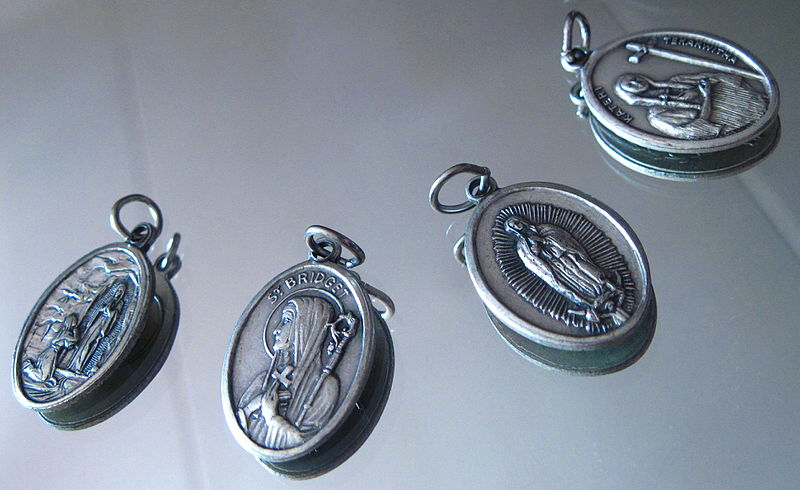
Four Catholic devotional medals By GrammarFascist (Own work) [CC BY-SA 4.0 (http://creativecommons.org/licenses/by-sa/4.0)], via Wikimedia Commons
Devotional medals are pieces of metals, often worn around the neck, struck to commemorate some aspect of Catholic religion, either a person (Christ, the pope, a saint), a place (churches or shrines) or an idea. They exist to remind the wearer of his or her faith in God, to offer a way to communicate with God and to strengthen one’s beliefs.
 
The use of amulets for protection was widespread among pagans. Early Christian leaders adapted this practice in the form of small metal objects, often in the shape of crosses or coins. These coins would be stamped with an image on either one or both sides, often of a saint or shrine. This practice continued into the Middle Ages, but it is unknown how widespread it was due to lack of records. The earliest mention of medals struck for a specific reason is found in the 12th century. At this time, pilgrims received tokens cast in lead as a sign that they had visited a famous pilgrimage site. These “pilgrim signs” were often worn on the breast or hat.  By the Renaissance in the 14th century, medals used specifically for religious devotion were being struck in Italy. They were made to represent saints or shrine and to commemorate papal jubilees. Eventually, indulgences were attached to particular medals. By the 17th century, the practice had spread to all of Catholic Europe and most cities had craftsmen capable of producing medals.
 
In the centuries since they were developed, hundreds of varieties of medals have been produced. Although it is impossible to classify all of these medals, several types have become common. Plague medals were struck and blessed as protection against pestilence. Their subjects often included St. Sebastian, St. Roch or shrines of the Blessed Virgin Mary. Medals commemorating Miracles of the Eucharist are struck in the place where the miracle occurred to commemorate jubilees and centenaries of the miracles. Private medals are struck to commemorate events in the life of an individual, such as baptism, marriage or first communion. Papal medals have been struck since Pope Martin V in 1417 to commemorate important events during a pontificate, most often the opening and closing of the Holy Doors in a Jubilee year.
Comments

Catholic Culture: Holy Cards

6/27/2017

Comments

 
Picture
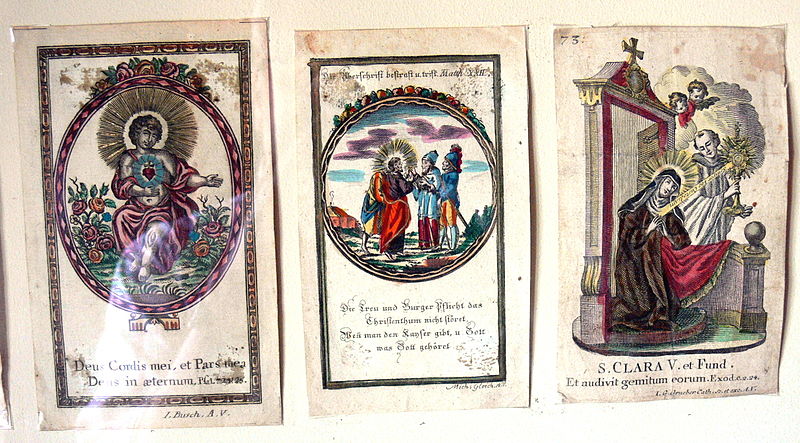
By Wolfgang Sauber (Own work) [GFDL (http://www.gnu.org/copyleft/fdl.html) or CC BY-SA 3.0 (http://creativecommons.org/licenses/by-sa/3.0)], via Wikimedia Commons
Holy cards are small, devotional pictures which are mass-produced for the use of the faithful. They usually depict a religious scene or a saint and are about the size of a playing card. On the reverse is typically a prayer. Prayer cards are used to commemorate many important events such as baptisms, confirmations and other religious events. One of the most common of these special cards are “In memoriam cards.” These are printed to be distributed at funerals and often contain a photo of the deceased person with details of the person’s life printed on the back. The circulation of holy cards is an important part of Roman Catholic culture. Prayer cards have also become popular among Orthodox and Protestant Christians.
 
Holy cards have their origins in portable woodcuts of old master prints. These portable prints served many of the same functions as holy cards in the late Middle Ages and Renaissance. The oldest surviving example of these woodcuts is an image of St. Christopher from 1423. Later, engravings and etchings became more common. These were often created by monasteries and convents as a way to generate funds and to serve as mementos for visiting pilgrims. A special form of these cards was developed by nuns in France who would create elaborate lace borders for the cards. These elaborate holy cards became known as devotes dentelles.
 
The invention of lithography in the 18th century made it possible to mass produce holy cards easily, increasing their popularity. The development of chromolithography, which allowed multiple colors to be used, in the early 19th century led to an explosion in the popularity of holy cards. One of the earliest centers of manufacturing was at the Church of St. Sulpice in Paris. There cards were noted for their pastel colors and proved to be influential on later designs. As their popularity grew, Belgium, Germany and Italy also became centers of manufacturing holy cards. Catholic printing houses produced thousands of cards and, often, a single design would be printed by multiple companies in different countries. For a time, they even proved to be collectible, as companies would produce a series of cards about the life of a saint and package one card with a product such as a box of chocolates. The consumer would then try to collect all of the cards in the series.
 
The popularity of holy cards continued to grow into the 20th century. One of the most famous of these holy cards is known as the Head of Christ and is based on the famous painting by Warner Sallman. It was widely produced and distributed to soldiers during World War II, and its popularity increased during the early days of the Cold War. However, following Vatican II and the introduction of the Novus Ordo Mass led to a decline in the use of holy cards as the need for missals declined. However, in recent years, interest in holy cards has seen a resurgence, especially among collectors.

Comments

Catholic Culture: Incense

6/13/2017

Comments

 
Picture
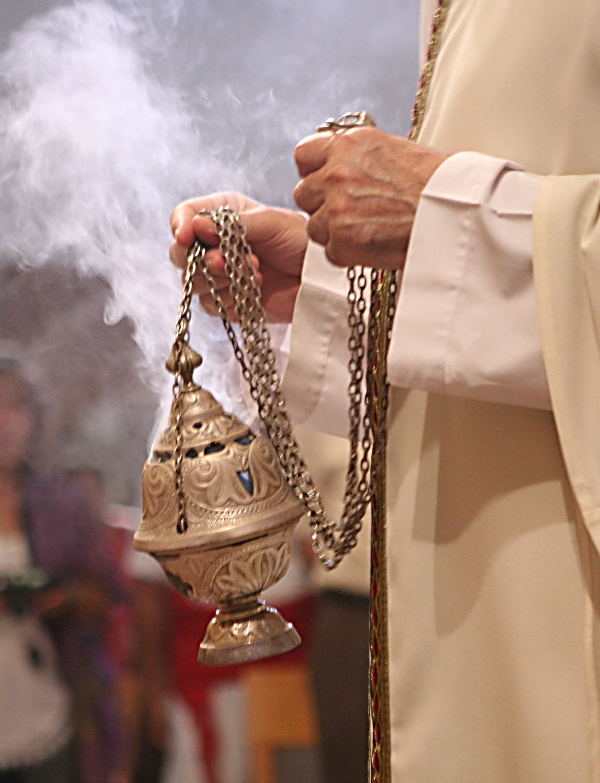
By Ajuntament de Sant Vicenç de Montalt (Ajuntament de Sant Vicenç de Montalt) [GFDL (http://www.gnu.org/copyleft/fdl.html) or CC BY 3.0 (http://creativecommons.org/licenses/by/3.0)], via Wikimedia Commons
Incense is an aromatic substance made from plant materials that, when burned, releases fragrant smoke. It has been used by many cultures and religions throughout the world, both for its religious symbolism and for various health reasons. Incense has been used in Christian worship since antiquity. It has been particularly used in Eastern Christian churches, Roman and Eastern Catholic Churches, Old Catholic Church and some Anglican and Lutheran Churches. The practice is rooted in the traditions of Judaism in the time of the Second Temple. Its use is interpreted as both a form of sacrificial offering to God and as a symbol of the prayers of the faithful rising to heaven. It is also used as a form of purification. The use of incense during liturgies is intended to remind the faithful of the sweet smell of the presence of God and that our worship transcends the gap between heaven and earth.
 
A type of censer called a thurbile is used to contain incense as it is burned. During the liturgy, the thurifer, a server carrying the thurible, approaches the minister conducting the service, often with a boat bearer carrying the boat, a receptacle which contains the unburned incense. Incense is taken from the boat and, after being blessed with a prayer, is spooned on red-hot coals. The thurible is then swung toward the people or objects being reverenced. In the Latin Rite, the thurible is swung in groups of three to represent the Persons of the Holy Trinity. The number of swings depends on the sanctity of the object being reverenced and whether the person is alive or dead, clergy or laity and a cleric’s rank within the hierarchy. Traditionally, incense can be used to reverence the bread and wine offered for the Eucharist, the consecrated Eucharist, the Gospel during its proclamation, the crucifix, icons in Eastern Churches, clergy, the congregation, the Paschal candle and the body of the deceased person during a funeral. It is also used during processions. Additionally, five grains of blessed incense are placed in the Paschal Candle as a reminder of Christ’s wounds.

Comments

Rogation Days

5/23/2017

Comments

 
Picture
Photo by Dennis Jarvis on flickr.com https://creativecommons.org/licenses/by-sa/2.0/legalcode
The three "Rogation Days" would have been Monday through Wednesday of this week.

The word "rogation" comes from a Latin word that means "to ask." In the latter part of the fifth century, the region of Vienne, France, experienced an earthquake, fire and bad weather which combined to ruin their young crops and cause widespread hunger. To ask God's protection against future disasters, the bishop inaugurated three days of penitence and prayer on the Monday, Tuesday, and Wednesday before Ascension Thursday.

This custom spread to the rest of France, and soon to the whole Church.

The penitential character of these days is out of step with the Easter season, and the traditional form of the Rogation Days is no longer observed.

However, particularly in farm areas, there is a growing custom of gathering to pray for God's blessings upon the newly planted crops and the eventual harvest.

- Little White Book, Diocese of Saginaw

Comments

Catholic Culture: Flores de Mayo

5/23/2017

Comments

 
Picture
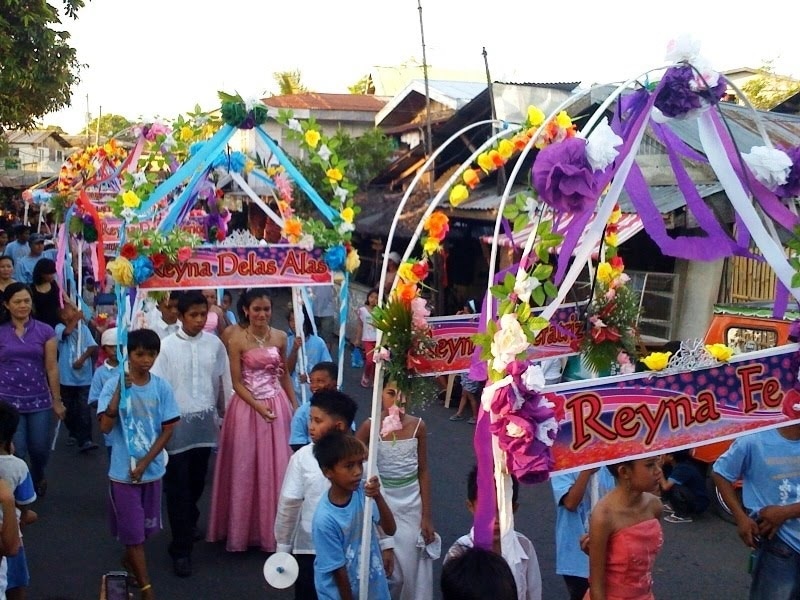
Flores de Mayo is a festival held in the Philippines during the month of May. It is devoted to the Blessed Virgin Mary and lasts the entire month of May. Flores de Mayo began after the proclamation of the doctrine of the Immaculate Conception in 1854. The name comes from the Spanish for “flowers of May” and can also be called Flores de Maria (“flowers of Mary”) or Álay (Filipino for “offering”). The Santacruzan (form the Spanish for “Holy Cross”) is a ritual pageant held on the final day of the festival. It honors the finding of the True Cross by St. Helena.
 
Celebrations vary throughout the Philippines. In the Bicol Region, celebrations are held every Wednesday and Saturday. The ritual begins by reciting the rosary, followed by reciting the Salve Regina and the Litany of Loreto. Afterwards, children are given simple snacks. In Western Visayas, children gather in a chapel or a church to offer flowers to Mary and receive a simple catechism about the life and story of Mary, Christian doctrines and values. They are also taught prayers and songs unique to Flores de Mayo, a tradition reminiscent of the Fatima apparition. The children also receive snacks and, in some places, tickets which can be redeemed for school supplies. In Batangas, the main celebration is the Luglugan. This is a nightly devotion and party honoring Mary. Flowers and prayers are offered to Mary followed by a party, which is hosted by a different family each night.
 
The culmination of Flores de Mayo is the Santacruzan, a religio-historical beauty pageant and parade depicting the finding of the True Cross by St. Helena. It is the most colorful of the festival celebrations and many movie and television stars participate in the major Santacruzan. Prior to the pageant, a novena is held in honor of the Holy Cross. Pageant participants represent two different groups. The first represent biblical figures and traditional personifications such as the Queen of Sheba, Judith, Cleopatra and the Queens of Faith, Hope and Charity. The second group wear costumes which allude to a title of Mary or a figure associated with her. The last member of the procession is always the Reyna Elena, or Queen Helena, who carries a crucifix in her arms and is accompanied by a small boy playing Constantine the Great. The role is the most prestigious and is often awarded to the most beautiful girl or important matron in the town. In many towns, the identity of Queen Helena is a closely guarded secret. The entire procession is accompanied by a brass band playing the Dios te Salve with devotees walking along the route signing the prayer and holding candles.

Comments

What's That Word?: Votive Candle

5/18/2017

Comments

 
Picture
By Sankarshansen (Own work) [CC BY-SA 3.0 (http://creativecommons.org/licenses/by-sa/3.0)], via Wikimedia Commons
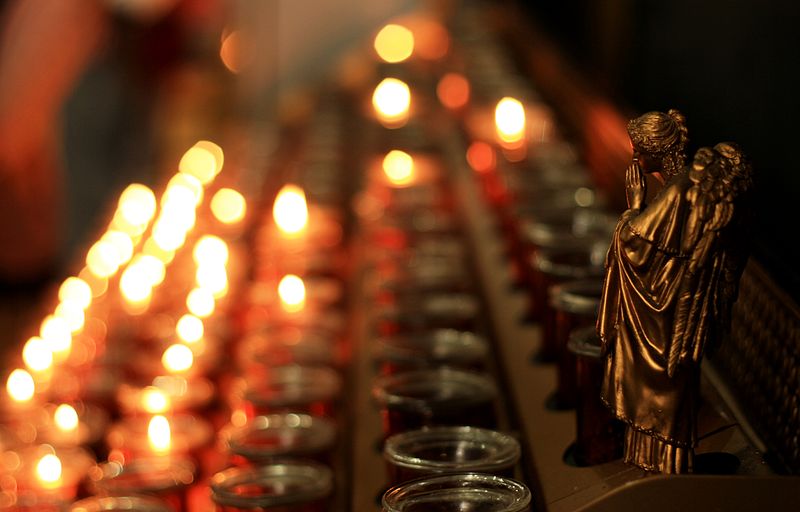
Candles burned before some statue or shrine to give honor to Our Lord, Our Lady, or one of the saints. The word "votive" goes back to the ancient custom of lighting candles in fulfillment of some private vow (votum).
 
- From catholicculture.org 


Candles and lamps have been used by religions all over the world for millennia as a way to symbolize prayers. The idea behind this is that as the candle is consumed the prayers, in the form of smoke, ascend to heaven. For Catholics, one of the most common forms of this is the votive candle. These are candles which are usually found in front of a statue or side altar in a church and are lit for a specific intention, often a person who has died. Votive candles are also used in home altars and can be of any size, from tiny tea lights to tall pillar candles. The practice of lighting votive candles is an excellent way to teach children about praying for others. It is a way for us to engage our senses in prayer and unite the spiritual with the physical nature of our humanity.

Comments

Catholic Culture: Mary Garden

5/16/2017

Comments

 
Picture
Mary Garden at Chapel of Most Holy Trinity at the West Point Military Academy by Ahodges7 (Own work) [CC BY-SA 3.0 (http://creativecommons.org/licenses/by-sa/3.0) or GFDL (http://www.gnu.org/copyleft/fdl.html)], via Wikimedia Commons
A Mary Garden is a small, sacred garden enclosing a statue or shrine of the Virgin Mary. It is most commonly associated with denominations which hold Mary in special esteem, particularly among Roman Catholics and Anglicans.  Mary Gardens can be of any size, from a small indoor pot to a large plot of land outdoors. The statue of Mary is central and is surrounded by flowers, shrubs and trees associated with legends of Mary and may include benches and a location in which to light votive candles. Devotion is shown to Mary in two ways: through designing, building and maintain the garden and through attendance, contemplation and prayer in the garden. In this way, Mary Gardens are similar to the Buddhist tradition of Zen gardens, although Zen gardens are never dedicated to a specific person as Mary Gardens are.
 
Mary Gardens originated among the monasteries and convents of medieval Europe. People in the Middle Ages saw reminders of Mary in the flowers and herbs growing around them and recalled stories associated with the various plants. The first reference to a garden specifically dedicated to Mary is that of St. Fiacre, the patron saint of gardening, in 7th century France. At his hospice for the poor and infirm, he planted a garden around the oratory dedicated to Mary. St. Mary’s Gold, another name for the calendula, is the first recorded instance of a flower named after Mary, found in a 1373 English recipe for a drink to ward of plague. Frances Crane Little established the first public Mary Garden in the United States in 1932 at St. Joseph’s Church in Woods Hole, Massachusetts. She was inspired by the symbolic flowers and herbs she encountered during a visit to England. This garden inspired Edward McTague and John Stokes to establish their own Mary’s Gardens in Philadelphis in 1951. These gardens served as a project to research flowers associated with Mary and to make seeds and information available to start Mary Gardens throughout the United States.
 
Almost any flower or herb can be used in a Mary Garden, but several have specific Marian legends associated with them. Some of the more famous include:
​
Picture
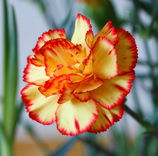
  • Carnation (Mary’s Love of God) which is said to have bloomed at Christ’s Nativity;

Picture
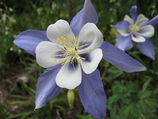
  • Columbine (Our Lady’s Shoes) which are said to have sprung up under Mary’s feet as she went to visit Elizabeth;

Picture
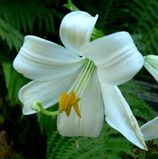
  • Madonna Lily which is the lily Gabriel presented to Mary at the Annunciation;

Picture
  • Ox-Eye Daisy (Mary’s Star) which legend says Melchior picked upon the arrival of Magi in Bethlehem because of its similarity to the star they had followed; this caused the door to the stable to open and reveal the Holy Family;

Picture
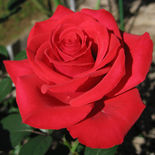
  • Rose which symbolizes Mary herself; roses and lilies are said to have filled Mary’s tomb when it was opened by the Apostles;

Picture
  • Thrift (Our Lady’s Cushion) which is said to have made a place for Mary to sit during the Flight into Egypt;

Picture
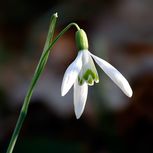
  • Snowdrops (Candlemas Bells) which are said to have bloomed on the day Mary presented Jesus in the Temple;

Picture
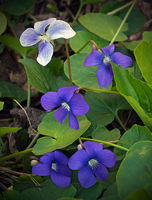
  • Violets which are a symbol of Mary’s modesty, simplicity and humility;

Picture
  • Bluebells (Our Lady’s Thimbles) whose flowers resemble tiny thimbles and represent Mary’s working hands;

Picture
  • Rosemary, upon which Mary is said to have the clothes of the Child Jesus causing a sweet aroma to be left behind on its branches;

Picture
  • Lily of the Valley (Our Lady’s Tears) which are said to have sprung up at the foot of the cross where Mary’s tears fell; and

Picture
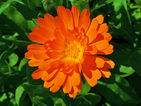
  • ​Marigolds which were placed around statues of Mary be early Christians in place of coins and were called Mary’s gold.

Comments

Catholic Culture: May Crowning

5/9/2017

Comments

 
Picture
Traditionally, the month of May has been associated with devotions to the Blessed Virgin Mary. This practice is believed to have originated in Italy in the 17th century where it was observed with floral processions and crownings of Marian statues and icons. By the 19th century, this devotion had spread to the entire Roman Catholic Church. May was probably chosen because several Marian feasts currently occur or used to occur during May: Our Lady, Queen of Apostles (Saturda after the Ascension); Our Lady of the Most Blessed Sacrament (May 13); Our Lady of Fatima (May 13); Mary, Help of Christians (May 24); Mary, Mediatrix of All Graces (May 31); and the Visitation (May 31). Additionally, four approved Marian apparitions occurred during May: the 1830 appearance to St. Catherine Laboure; the 1846 appearance to the children of La Salette, France; the 1858 appearance to St. Bernadette at Lourdes, France; and the 1917 appearance at Fatima, Portugal.

Mary has long been named as “Queen of Heaven and Earth.” In addition, Mary has held the title “Queen of May” in many countries, as reflected in many traditional Marian hymns. These titles were confirmed by Pope Piux XII in his 1954 encyclical Ad Caeli Reginam in which he established the feast of the Queenship of Mary to be celebrated on May 31. (The celebration of this feast was later transferred to August 22.)

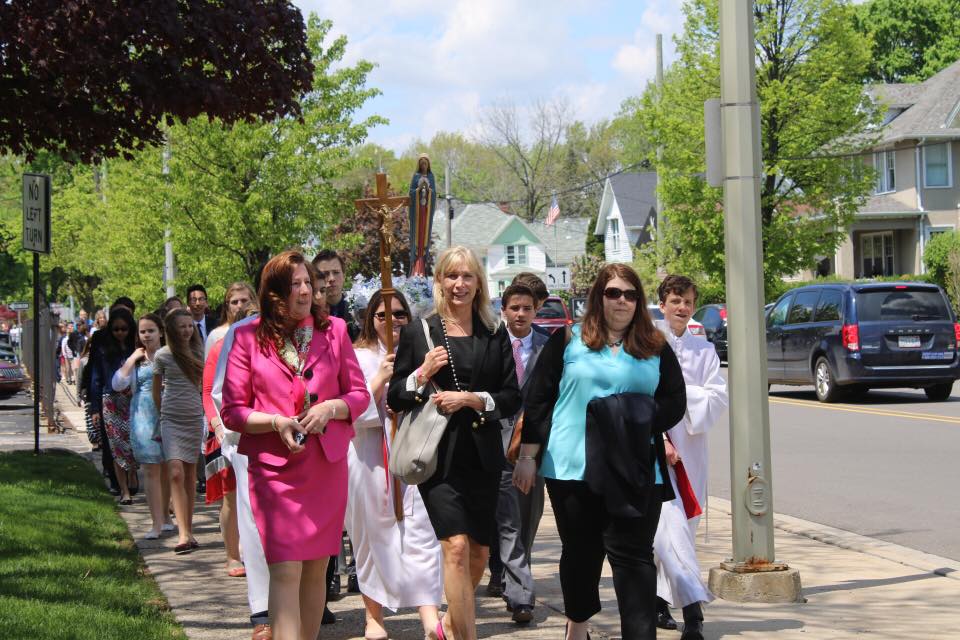
In Eastern churches, crowning Mary involved adding ornamentation to icons of Mary. This practice was honored by Pope Clement VIII when he added crowns to the Marian icon “Salus Populus Romani” in the St. Mary Major Basilica. In the western Church, parishes and private groups often process and crown an image of the Blessed Virgin Mary with flowers. This can be done on any solemnity or feast of Mary, but, in many countries, it takes place on May 1st. In the United States, it has become traditional to crown Mary on or around Mother’s Day. There is no official rite for a May Crowning ceremony, but it often consists of singing Marian hymns and reciting prayers such as the Litany of Loreto. The climax of the ceremony involves placing a crown of flowers on Mary’s head. This crown is often carried by a younger girl with Mary being crowned by the “May queen,” often one of the oldest girls. The traditional flowers used for the crown are hawthorn flowers, which are considered a symbol of hope, however many different flowers are used in contemporary practice. The flowers are often replaced with fresh flowers throughout the month.

Comments

Catholic Culture: Litany

4/25/2017

Comments

 
Picture
By NoslivRage (Own work) [CC BY-SA 3.0 (http://creativecommons.org/licenses/by-sa/3.0)], via Wikimedia Commons
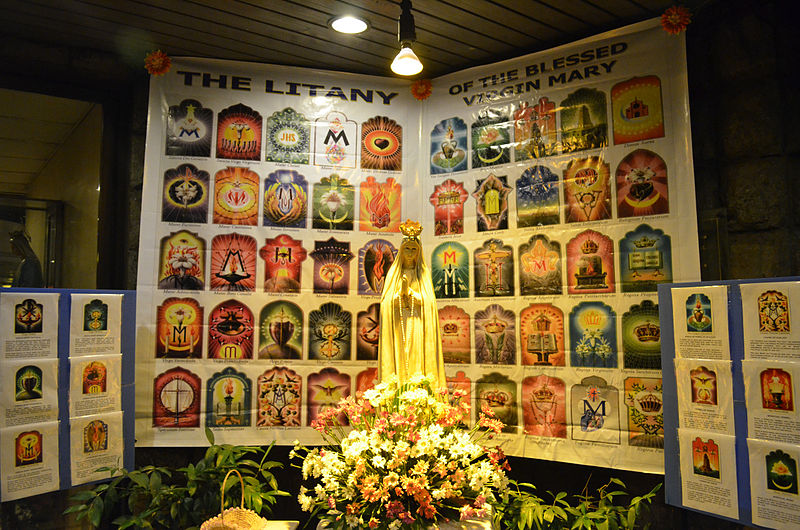
A litany is a form of prayer used in services and processions. It consists of a number of petitions and usually takes the form of a petition read by the leader with a response by everyone else. The name comes from the Latin litania via the Greek lite meaning “supplication.” The original form of the litany was probably the frequent repetition of the Kyrie, which was in use in Asia and Rome from a very early date. The number of repetitions was dependent on the celebrant. It is still used today at the consecration of a church while the relics to be placed in the altar are carried in procession around the church.

In the 5th century, public devotions and processions became more frequent and took the name litany. In Rome, the pope and the people would go on procession to a different church each day, especially during Lent. This is the origin of the Roman “Stations” during Lent and the “Litania Major” which takes place on April 25. Each of these features a procession during which the Litany of the Saints is recited.  In 477, the “Litania Minor”, which took place the week before the Ascension, was introduced in France to pray for fewer earthquakes and calamities. A similar litany was held in Spain the week after Pentecost.
​
Because of their popularity, numerous variations of the litanies were developed. These included litanies in honor of God the Father, God the Son, God the Holy Ghost, the Precious Blood, the Blessed Virgin Mary, the Immaculate Conception, various patron saints, the souls in Purgatory and more. By 1601, there were about 80 different litanies in publication. Consequently, and to prevent abuses, on September 6, 1601 Pope Clement VIII forbade the publication of any litanies other than the Litany of the Saints and the Litany of Loreto (also known as the Litany of the Blessed Virgin Mary). Later, litanies of the Holy Name of Jesus, the Sacred Heart, the Precious Blood and St. Joseph were approved for use. Other litanies are used in private prayer but are not approved for public recitation.

Comments

Catholic Culture: Chaplet of the Divine Mercy

4/18/2017

Comments

 
Picture
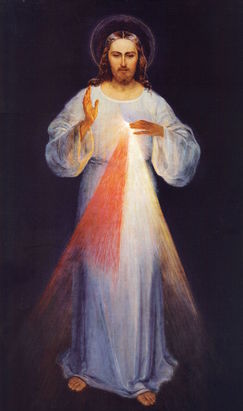
The Chaplet of the Divine Mercy is a Christian devotion to the Divine Mercy. It is based on apparitions of Jesus reported by St. Faustina Kowalska, Polish mystic and religious sister of the Congregation of the Sisters of Our Lady of Mercy. The chaplet is often said as a rosary-based prayer which uses the same set of beads that are used to recite the Holy Rosary. The chaplet is about a third of the length of the Rosary, and its structure has remained unchanged since St. Faustina received it. It can also be recited without the use of beads and is often accompanied by veneration of the Divine Mercy Image.

On September 13, 1935, St. Faustina recorded in her diary that she had a vision of Jesus during which he asked her to pray the chaplet and instruct others to do so. According to her diary, the chaplet’s prayers for mercy are intended to obtain mercy, to trust in Christ’s mercy and to show mercy to others. St. Faustina wrote that Jesus promised that all who recite this chaplet at the hour of death or in the presence of the dying will receive great mercy.

Traditionally, the chaplet may be said at any time, but it is said especially on Divine Mercy Sunday (the Sunday after Easter) and Fridays at 3:00 PM (the hour Jesus died by crucifixion, called the Hour of Mercy). As a novena, it is usually said each of the nine days from Good Friday to Divine Mercy Sunday. St. John Paul II was instrumental in extending the devotion to the Divine Mercy worldwide and promoted it in a Papal Blessing in 2001.

For more information about the Chaplet of the Divine Mercy and how to pray it, visit the USCCB page. 

Comments
<<Previous

    ABOUT

    St. Peter Parish is a Roman Catholic faith community.  The purpose of this blog is to help parishioners and community members come to a better understanding of our Catholic faith and traditions.


    For more information about the parish, visit our website.


    Spotify Top Christian Tracks


    Archives

    June 2017
    May 2017
    April 2017
    March 2017
    February 2017
    January 2017
    December 2016
    November 2016
    October 2016
    May 2016
    April 2016
    March 2016
    February 2016
    January 2016
    December 2015
    November 2015
    October 2015
    September 2015
    August 2015
    July 2015
    June 2015
    May 2015
    April 2015
    March 2015
    February 2015
    January 2015
    December 2014
    November 2014

    Categories

    All
    Catholic Culture
    Catholic Teachings
    Catholic Traditions
    Church History
    Daily Readings
    Evangelization
    Feasts & Holy Days
    Gospel Reflection
    Little Black Book
    Little Blue Book
    Little Burgundy Book
    Little White Book
    Liturgical Year
    Pop Culture
    Prayer
    Saints & Heroes
    Spiritual Life
    VCAT
    What's That Word?

    RSS Feed

Powered by Create your own unique website with customizable templates.