Key Thoughts
  • Home
105 Market St.
Mount Clemens, M
586-468-4578

www.stpetermtclemens.weconnect.com

Roberto Clemente

12/31/2016

Comments

 
Picture
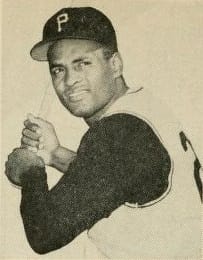
He may have been an All-Star outfielder, but Romberto Clemente is as well known for his philanthropy as he as for his baseball skill.

Born August 18, 1934, in Puerto Rico, he was the youngest of seven children. Roberto enjoyed baseball. While still in high school, he was offered a bonus to sogin with the Brooklyn Dodgers, but declined until he graduated.

In 1954, he was drafted by the Pittsburgh Pirates and, at age 20, still learning English, he became a starting outfielder.

In 1960, Roberto helped the Pirates win the National League pennant and the World Series. In the 1972 season, Clemente slammed his 3,000th hit.

Later that year, On December 23, 1972, the city of Managua, Nicaragua, was devastated by an earthquake that killed thousands and left many more homeless. Roberto helped oragnize a relief effort for the victims.

On New Year's Eve, despite his family's concern about weather and the plane's safety, he and four others boarded a small DC-7 with supplies for Managua. Shortly after takeoff, the plane crashed into the ocean.

All on board were killed.

In 1973, Roberto Clemente became the first Hispanic player elected to the Baseball Hall of Fame.

- Little Blue Book, Diocese of Saginaw

Comments

Saturday - Seventh Day in the Octave of Christmas

12/31/2016

Comments

 
Picture
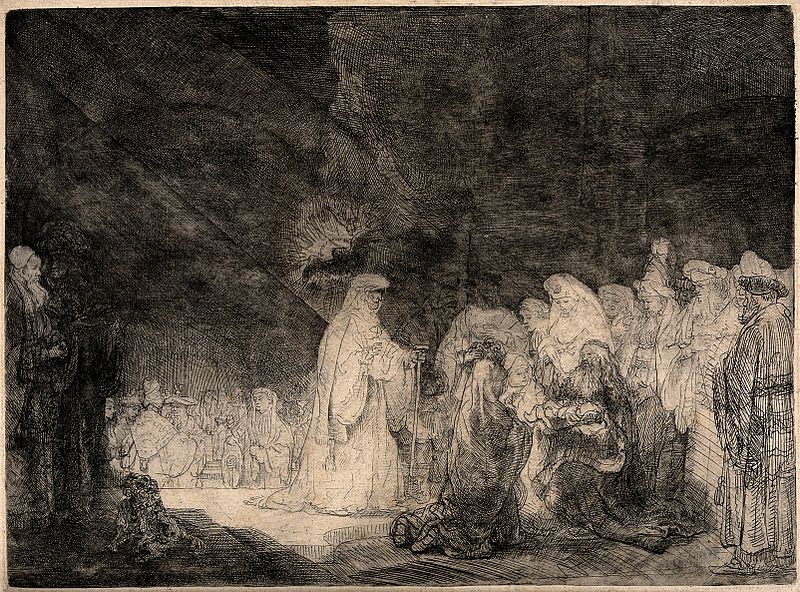
Simeon Holds the Infant Jesus in His Arms by Rembrandt
The child's father and mother were amazed at what was said about him; and Simeon blessed them and said to Mary his mother, "Behold, this child is destined for the fall and rise of many in Israel, and to be a sign that will be contradicted (and you yourself a sword will pierce) so that the thoughts of many hearts may be revealed." (Luke 2:33-35)
​
Simeone now speaks to the mother of this little child he is holding in his arms. He is looking ahead to the division between those who opt to follow Jesus, and those who do not.

Mary herself will have to make the decision to be on one side or the other. She is his mother, but will she become not only a mother who loves her child, but also someone who believes in the way of life that he preaches? That act of faith goes beyond family ties.

Mary made the decision. The Gospels show her relating to Jesus not only as his mother, but also as his disciple - a difficult bridge to cross. Pope Paul VI described her as the first and most faithful disciple.

All of us have to cross this bridge. There is a "sword of division" between those who simply admire Jesus ... and those who are willing to follow Jesus.

Which raises the question: Have you crossed that bridge?

Talk to the Lord about it.

- Little Blue Book, Diocese of Saginaw
Comments

Tomb of Simeon

12/30/2016

Comments

 
Picture
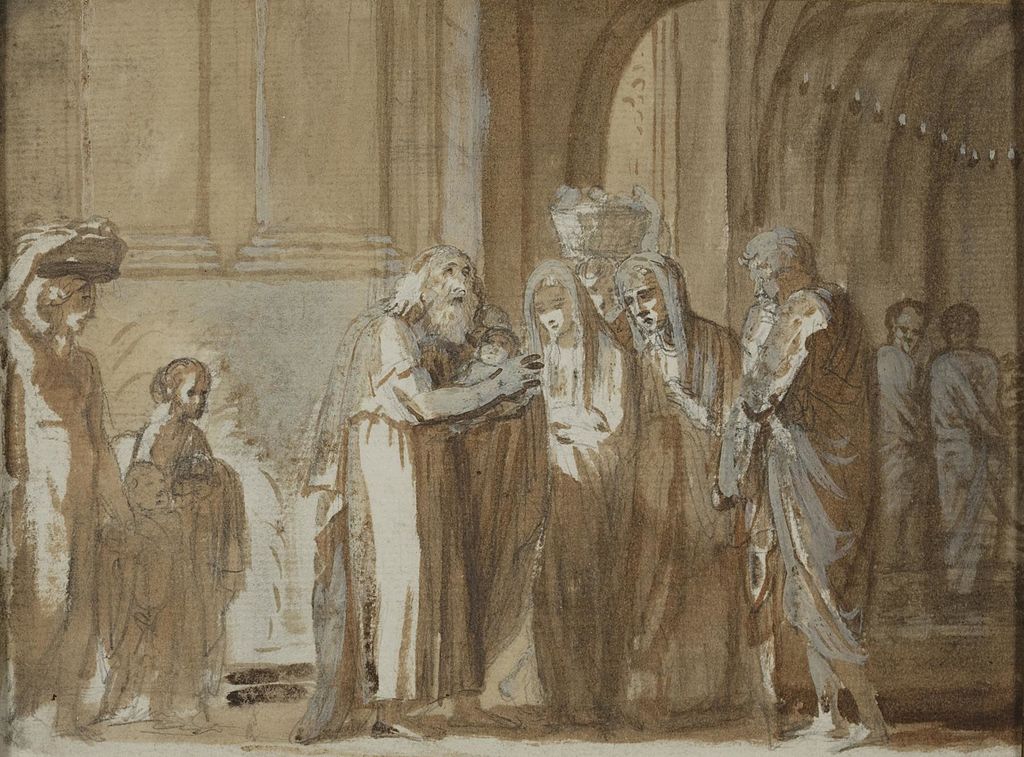
Simeon and the Child by Benjamin West
"Now there was a man in Jerusalem whose name was Simeon. This man was righteous and devout, awaiting the consolation of Israel, and the Holy Spirit was upon him." - Luke 2:25

In 2003, a burial monument that appeared to date back to the time of Jesus was discovered in the Kidron Valley, outside Jerusalem's Old City.

On the monument, in barely legibile Greek writing, was the name, Simon (Simeon is the Greek version of Simon), and a faded verse from the Gospel of Luke (2:25).

The insciription refers to Simeon, the devout Jew is today's right-hand reflection. The inscription reads, "Simeon who was a very just man and a very devoted old (person) and waiting for the consolation of the people."

- Little Blue Book, Diocese of Saginaw
Comments

Friday - Feast of the Holy Family

12/30/2016

Comments

 
Picture
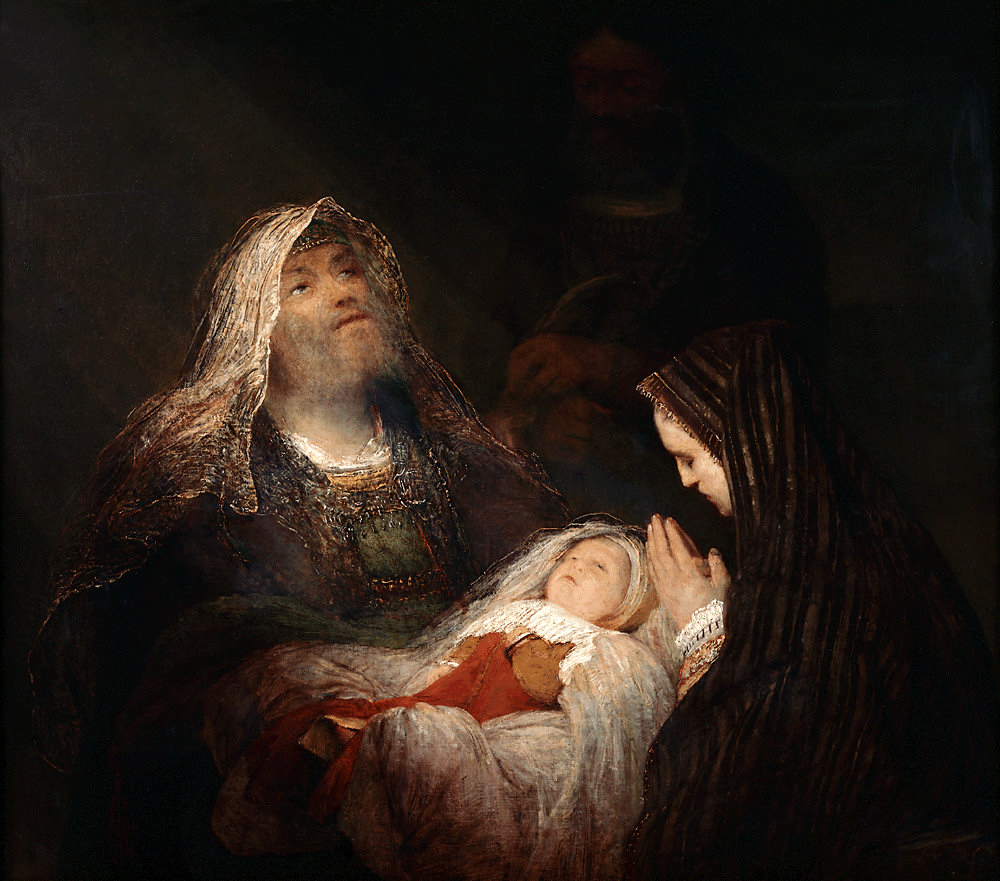
Simeon's Song of Praise by Aert de Gelder
Simeon came in the Spirit into the Temple; and when then parents brought in the child Jesus to perform the custom of the law in regard to him, he took him into his arms and blessed God, saying:

"Now, Master, you may let your servant go in peace,
      according to your word,
for my eyes have seen your salvation,
      which you prepared in the sight of all the peoples,
a light for revelation to the Gentiles,
      and glory for your people Israel." (Luke 2:27-32)


This is quite a scne - an aged, holy man holding the two-month-old Jesus in his arms, looking into Jesus' face ... and talking to God.

The name "Simeon" ("God has heard") characterizes him as a man of hope. He trusts in God and speaks of peace and light and salvation and glory.

Simeon's words have become part of the night prayer of the Church, used in the Liturgy of the Hours at the end of every day of the year. This canticle is known as the Nunc Dimittis, Latin for the first words of the prayer, "Now you may let your servant go ..."

That's a good way ot end each day. You go to bed and rest in peace, entrusting yourself into the hands of God. You can do it in Simeon's words, or you can use your won. Just one short sentence would do it: "Lord, as I go to sleep, I place myself into your hands."

A holy thing to do.

- Little Blue Book, Diocese of Saginaw
Comments

Gospel Reflection: Solemnity of Mary, the Mother of God - January 1, 2017

12/30/2016

Comments

 
Picture
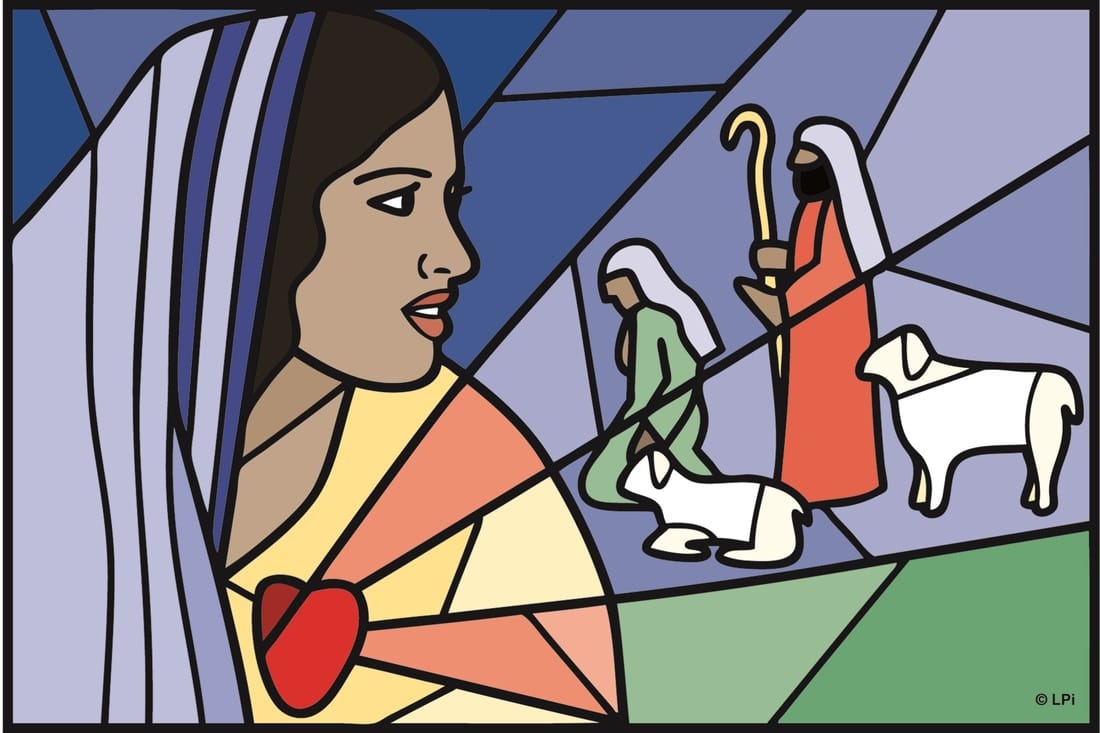
The shepherds went in haste to Bethlehem and found Mary and Joseph, and the infant lying in the manger. When they saw this, they made known the message that had been told them about this child. All who heard it were amazed by what had been told them by the shepherds. And Mary kept all these things, reflecting on them in her heart. Then the shepherds returned, glorifying and praising God for all they had heard and seen, just as it had been told to them.

When eight days were completed for his circumcision, he was named Jesus, the name given him by the angel before he was conceived in the womb.

- 
Luke 2:16-21 
​
There is a line in this Sunday’s Gospel that is one of the most beautiful in the Bible: “And Mary kept all these things, reflecting on them in her heart.” The beauty comes in the simplicity of the statement and the model it presents for each of us. I am sure after everything that happened, Mary needed some time to reflect. Even under the best of circumstances becoming a parent requires a period of adjustment; for Mary there must have been a lot of things to ponder and think about.
 
The New Year presents each of us a chance to reflect as well. Just as Mary took time to reflect on all that had happened to her, we each should reflect on what has happened with us over the past year. Perhaps you started a new job. Maybe you got married or divorced. Maybe you had a new baby or grandbaby or experienced the death of a loved one. Whatever happened, God wants you to follow Mary’s example and reflect on it in your heart.
 
However, that does not mean we should just be passively thinking about what happened. When you reflect on things, you should be looking at the questions and thoughts that arrive and be actively sorting through them. You should actively seek out the answer to your questions: both in further reflection and in prayer. Then you need to act! Make changes in your life to improve on anything that needs improving. Sometimes that involves ending a particularly negative relationship. Sometimes we need to work on eliminating a bad habit or starting a new good habit. Sometimes we need to adjust our priorities and refocus our attention. Whatever it is that needs to be done to make the New Year better, that is what we should be doing.
 
Too often, we sit back and wait for things to happen. We think that this is how God works. We pray for something, we reflect on something, and then just wait for it to happen. Instead, we need to take action in our own lives. God will surely be right there with us, helping us along the way. But He wants us to take the initiative and be willing to take the first step. Just as Mary said “Yes,” He is waiting for us to say “Yes.” So this New Year, take some time to reflect and then go out and change the world!

Comments

Canterbury Cathedral

12/29/2016

Comments

 
Picture
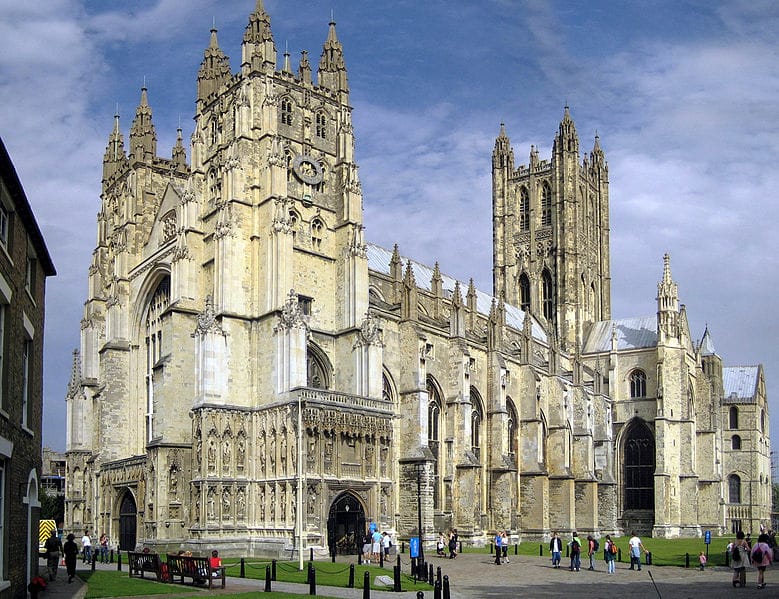
By Hans Musil (Picture taken and postprocessed by Hans Musil.) [GFDL (http://www.gnu.org/copyleft/fdl.html) or CC BY-SA 4.0-3.0-2.5-2.0-1.0 (http://creativecommons.org/licenses/by-sa/4.0-3.0-2.5-2.0-1.0)], via Wikimedia Commons
Canterbury Cathedral in England was first built by St. Augustine, who had been sent in 597 AD by Pope Greagory the Great to convert the Anglo-Saxons. It is one of the country's oldest Christian churches.

For many years, the area's Christian community lived with the archbishop in the cathedral. In the 10th century, a Benedictine monatery was added to the cathedral. Henry VIII dissolved the monastery in 1540, and the cathedral became part of the Church of England.

The original building constructed by Augustine lies beneath the nave of the current cathedral, which was rebuilt and enlarged by the Saxons, and then, in 1070, completely rebuilt after a fire.

On this day in 1170, as Thomas Becket, the archbishop of Canterbury, was in the cathedral's northwest transept preparing for vespers, knights of Henry II cut him down with their swords and killed him.

- Little Blue Book, Diocese of Saginaw
Comments

Thursday - Fifth Day in the Octave of Christmas

12/29/2016

Comments

 
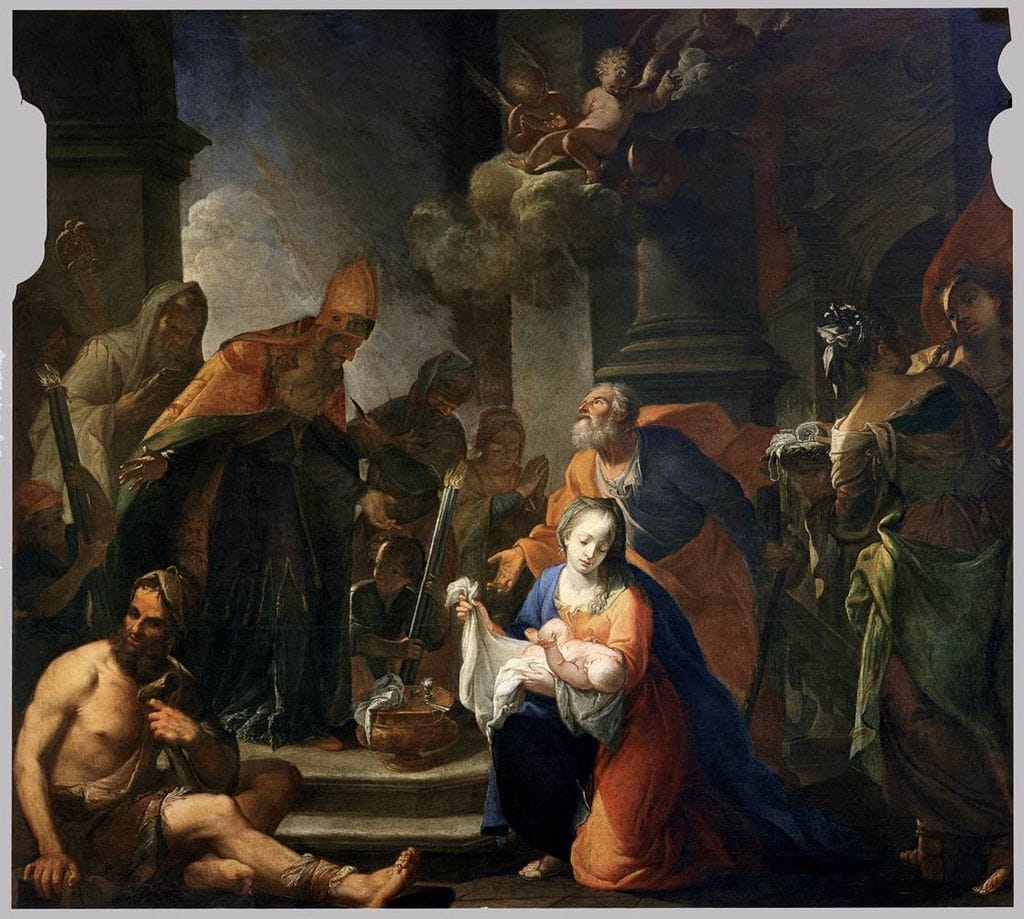
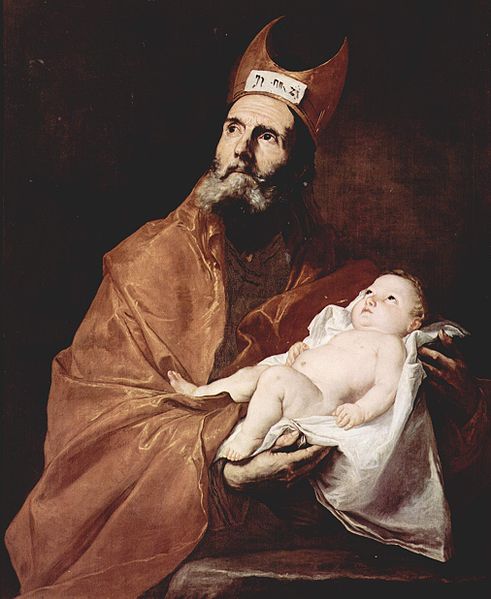
PictureSaint Simeon with the Christ Child by Jose de Ribera
Now there was a man in Jerusalem whose name was Simeon. This man was righteous and devout, awaiting the consolation of Israel, and the Holy Spirit was upon him. It had been revealed to him by the Holy Spirit that he should not see death before he had seen the Messiah of the Lord. (Luke 2:25-26)
​
Simeon is about to hold the Messiah in his arms. (Take a moment and imagine doing that.)

He had waited many years for this, but he knew that some day, before he died, it would happen.

Here's an interesting question: What is it you want to see or do before you die? You might have your own "bucket list:"
  • To see your son/daughter straighten out their life.
  • To see a world at peace.
  • To have someone in your life who loves you specially, and forever.
  • To get your own life together, your head above water.

What are the things you want to see or do before you die?

It'd be good to talk it over with the Lord.

- Little Blue Book, Diocese of Saginaw

Comments

What's That Word?: Infallibility

12/29/2016

Comments

 
Picture
By Friedrich Stummel (Die katholischen Missionen) [CC BY 3.0 (http://creativecommons.org/licenses/by/3.0)], via Wikimedia Commons
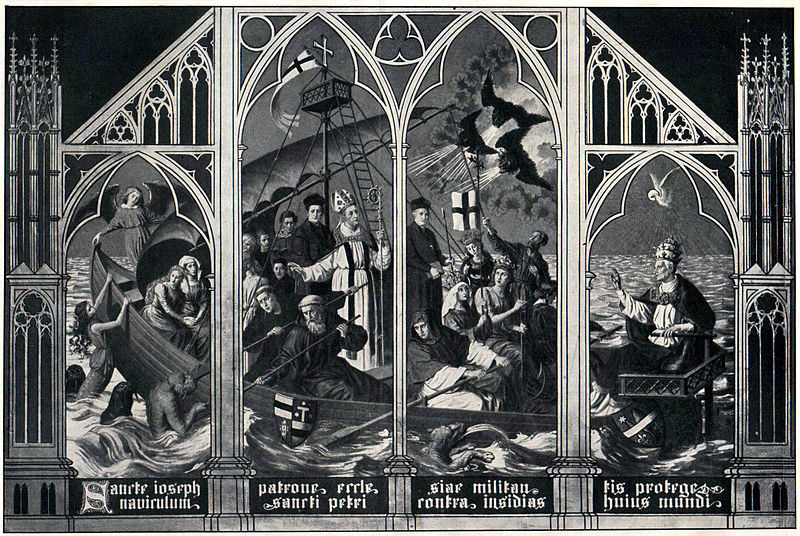
The inability to err in teaching the truth. In theology, it refers to: (1) the Church, in that she preserves and teaches the deposit of truth as revealed by Christ; (2) the Roman Pontiff, when he teaches ex cathedra in matters of faith or morals, and indicates that the doctrine is to be believed by all the faithful; (3) the College of Bishops, when speaking in union with the Pope in matters of faith and morals, agreeing that a doctrine must be held by the universal Church, and the doctrine is promulgated by the Pontiff.

- Catholic Dictionary, p. 408 

​
The Doctrine of Infallibility, while not officially taught until the First Vatican Council in 1869-70, has been held by the Church since its beginning. Some people, especially our Protestant brothers and sisters, assume that infallibility means the Pope can never make an incorrect statement. This ignores the beauty and requirements of the doctrine. Essentially, this doctrine teaches that God will preserve the Church from erroneous teachings as long as certain qualifications are met. These include the teaching being proclaimed by the Pope, the teaching being about matters of faith and morals and the teaching be declared as something that must be held by the universal Church. Since it has such rigorous requirements, situations in which infallibility are invoked are fairly unusual. This doctrine really is something we as Catholics should rejoice in because it means that God so loves His church that He is willing to preserve her from error.

Comments

Candlemas Day

12/28/2016

Comments

 
Picture
By Камалян001 (Own work) [CC BY-SA 3.0 (http://creativecommons.org/licenses/by-sa/3.0)], via Wikimedia Commons
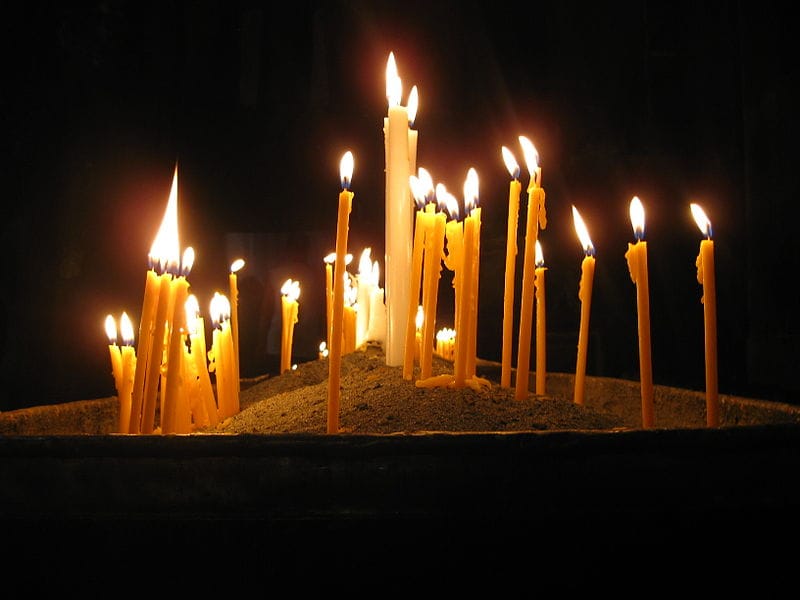
Today's Gospel text on the right-hand side is the Scripture used on the feast of the Presentation of Christ in the Temple, which is celebrated February 2. It is also known as Candlemas Day.

According to Jewish law, a woman who gave birth to a son was considered "unclean" for seven days, and excluded from the Temple for 33 days. When she was finally allowed to go to the Temple, she was to bring a lamb and a pigeon (or turtle dove) for sacrifice. The priest would pray for her and she would be cleansed.

On Candlemas Day, candles are blessed and distributed for home use - a practice that grew in popularity in the 11th century. During the ritual, the canticle of Simeone (Nunc dimittis) is sung, in which Simeone calls Jesus "a light for revelation."

Prior to Vatican II, this feast was known as the Purification of the Blessed Virgin Mary, and traditionally marked the end of the Christmas season. The council shifted the emphasis to the presenation of the Infant Jesus in the Temple.

Pope John Paul II instituted the practice of renewing religious vows on Candlemas Day.

- Little Blue Book, Diocese of Saginaw
Comments

Wednesday - Feast of the Holy Innocents

12/28/2016

Comments

 
Picture
When the days were completed for their purification according to the law of Moses, Mary and Joseph took Jesus up to Jerusalem to present him to the Lord, just as it is written in the law of the Lord, "Every male that opens the womb shall be consecrated to the Lord," and to offer the sacrifice of "a pair of turtledoves or two young pigeons," in accordance with the dictate in the law of the Lord. (Luke 2:22-34)
​
Luke wants us to know that Mary and Joseph were devout and pious in their religious practices, always faithful to the law of Moses. (In this brief passage, Luke mentions the "law" three times.)

There is much to be said for this kind of faithfulness to religious practices. There's more to holiness than external practices, but religious traditions are important.

How did Mary and Joseph know about these traditions? By belonging to the Jewish community, and joining in its rituals.

Over these past 2,000 years, Christians have developed traditions. Some of these go back to the early days of the Church. How do we know about them, and know which ones are important? By belonging to a parish, and joining in its rituals.

We're about to begin the Year of Our Lord 2017. It would be a good time for you think about how much these ancient practices are part of your life. Or, to put it another way, it would be a good time for you to think about how much you re part of and tuned in to the life of the Church.

- Little Blue Book, Diocese of Saginaw
Comments
<<Previous

    ABOUT

    St. Peter Parish is a Roman Catholic faith community.  The purpose of this blog is to help parishioners and community members come to a better understanding of our Catholic faith and traditions.


    For more information about the parish, visit our website.


    Spotify Top Christian Tracks


    Archives

    June 2017
    May 2017
    April 2017
    March 2017
    February 2017
    January 2017
    December 2016
    November 2016
    October 2016
    May 2016
    April 2016
    March 2016
    February 2016
    January 2016
    December 2015
    November 2015
    October 2015
    September 2015
    August 2015
    July 2015
    June 2015
    May 2015
    April 2015
    March 2015
    February 2015
    January 2015
    December 2014
    November 2014

    Categories

    All
    Catholic Culture
    Catholic Teachings
    Catholic Traditions
    Church History
    Daily Readings
    Evangelization
    Feasts & Holy Days
    Gospel Reflection
    Little Black Book
    Little Blue Book
    Little Burgundy Book
    Little White Book
    Liturgical Year
    Pop Culture
    Prayer
    Saints & Heroes
    Spiritual Life
    VCAT
    What's That Word?

    RSS Feed

Powered by Create your own unique website with customizable templates.